Brain-Computer Interface (BCI) Trading
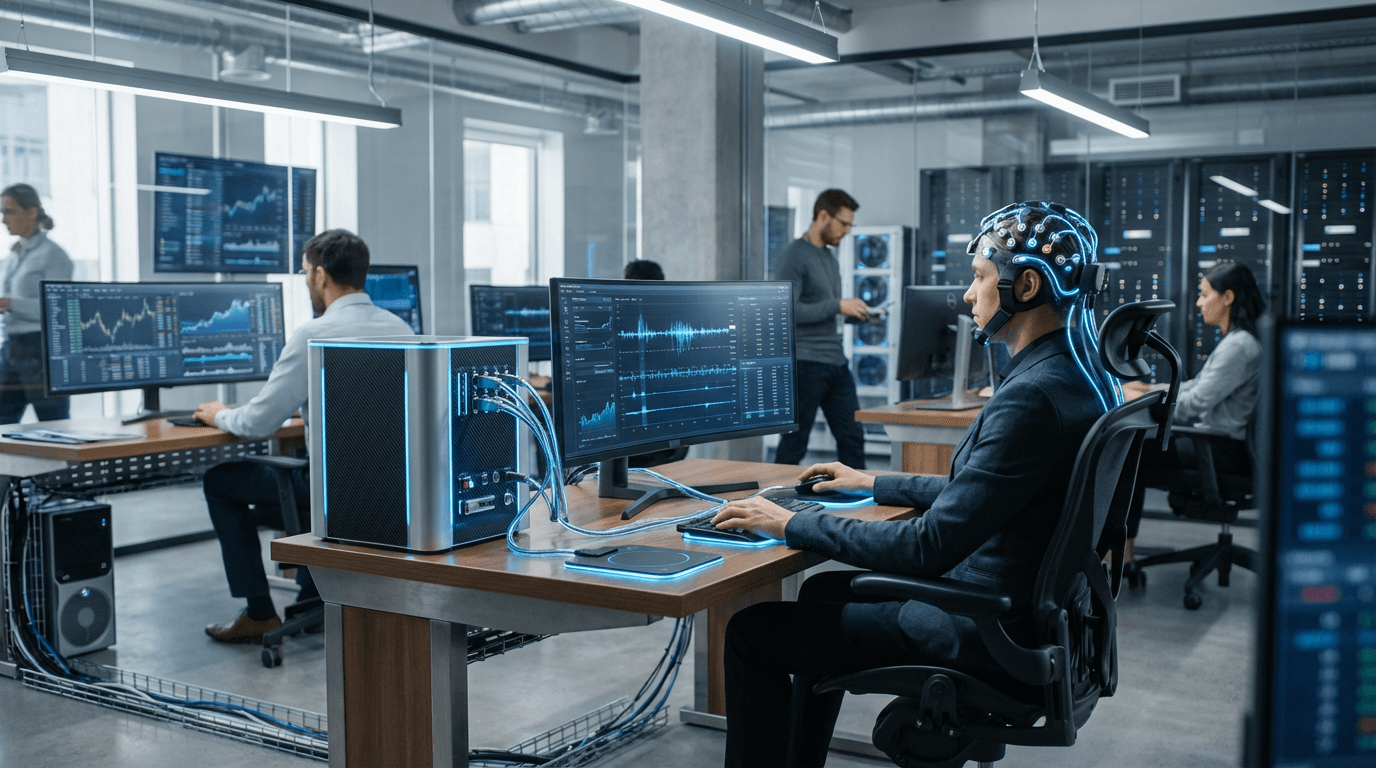
Brain-computer interface trading represents a convergence of neurotechnology and financial markets, enabling traders to interact with trading platforms and market data through direct neural signals rather than traditional input devices. These systems typically employ non-invasive electroencephalography (EEG) sensors embedded in headsets or caps to detect and interpret specific patterns of brain activity. When a trader thinks about executing a particular action—such as buying a security, adjusting a position, or querying market data—the BCI system recognizes these neural signatures and translates them into corresponding commands. Advanced signal processing algorithms filter out noise and identify intentional thought patterns, while machine learning models adapt to each user's unique brainwave characteristics over time. Some implementations also leverage biometric authentication, using the distinctive electrical patterns of an individual's brain activity as a secure identifier that is nearly impossible to replicate or steal.
The financial services industry faces mounting pressure to reduce execution latency and improve decision-making speed in increasingly competitive markets where milliseconds can determine profitability. Traditional interfaces—keyboards, mice, and even voice commands—introduce delays between cognitive decision-making and market execution. Brain-computer interfaces address this bottleneck by eliminating the physical intermediary, potentially reducing reaction times from hundreds of milliseconds to under one hundred. This technology also tackles the challenge of information overload that modern traders face, as BCI systems can be designed to respond to subconscious pattern recognition, allowing experienced traders to act on market opportunities their brains detect before they consciously articulate the insight. Additionally, the biometric authentication capabilities of BCIs offer enhanced security for high-value transactions, addressing growing concerns about credential theft and unauthorized access in an era of sophisticated cyber threats.
Early research deployments and pilot programs in institutional trading environments suggest that BCI trading may first find adoption in specialized high-frequency trading operations and among quantitative analysts who work with complex, multi-dimensional datasets. Industry analysts note that the technology could prove particularly valuable for traders managing multiple positions simultaneously or those who need to maintain constant vigilance over rapidly changing market conditions. Some financial technology firms have begun exploring hybrid systems that combine traditional interfaces with neural input for specific high-priority functions, allowing traders to reserve thought-based commands for time-critical decisions while using conventional methods for routine tasks. As the technology matures and regulatory frameworks evolve to address the unique compliance and audit trail requirements of neural trading interfaces, brain-computer interfaces may become an increasingly common component of institutional trading infrastructure, representing a broader trend toward human-machine integration in professional finance.
Related Organizations

Home to the Robotics and Perception Group (RPG).

The Duke Quantum Center (Kenneth Brown) focuses heavily on fault-tolerant architectures and error correction decoding.

Produces EEG headsets and the BCI-OS platform, allowing developers to build applications that respond to cognitive stress and facial expressions.

Develops high-performance BCI hardware, including the 'Unicorn' hybrid black interface for developers.

Develops BCI-enabled headphones that detect focus and intent to control digital experiences.

Develops semi-dry and dry EEG wearable devices for human behavior research and neurotechnology applications.

Creators of the Muse headband, a consumer EEG device used for meditation and cognitive research.

Neuroscience company developing non-invasive brain recording technology (Flow and Flux).
Creates open-source brain-computer interface tools and the Galea headset (integrating with VR) for researching physiological responses.

Neurotechnology company developing implantable brain-machine interfaces.
Supporting Evidence
Research this in Signals
Signals turns a topic into a sourced research record you can inspect and rerun. Your first scan is free, and this one starts with Brain-Computer Interface (BCI) Trading already loaded, so edit it or scan as is.