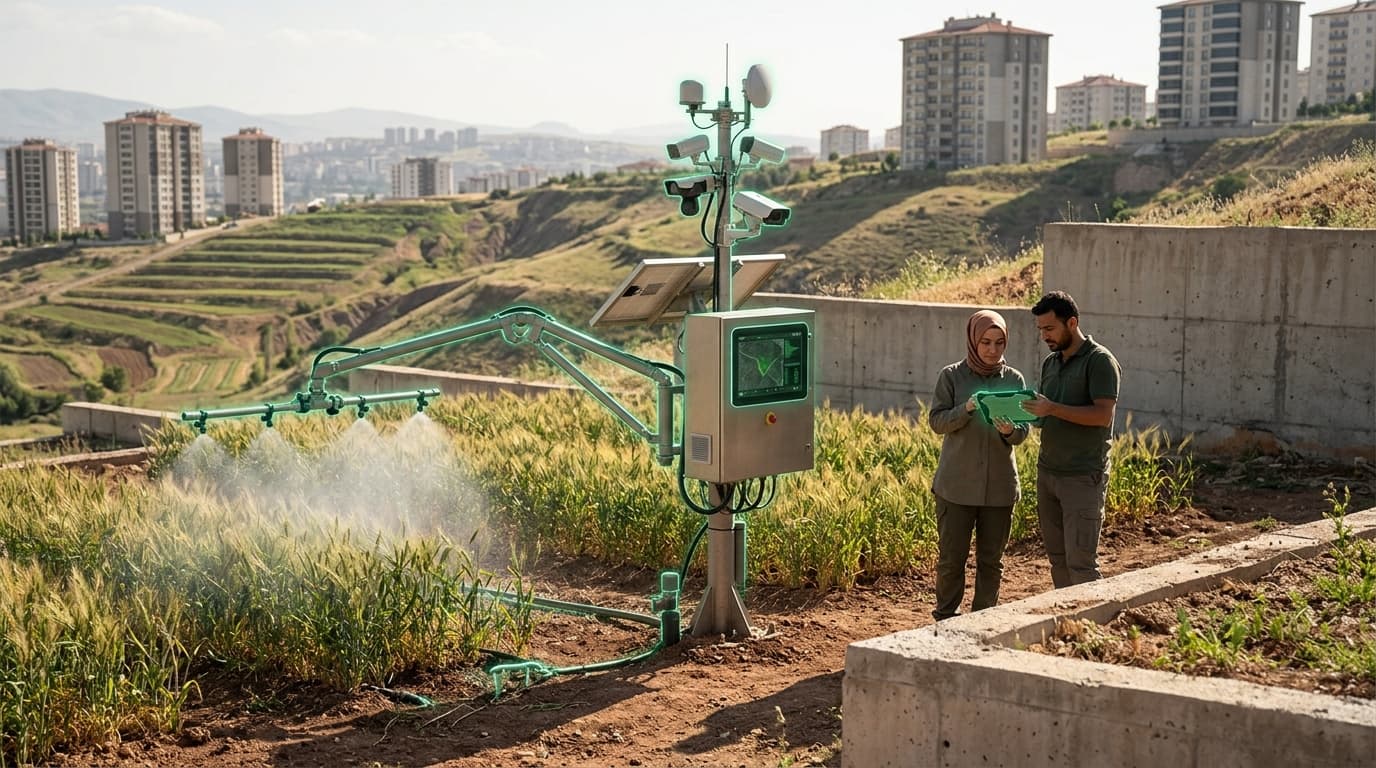
Climate-Adaptive Precision Agriculture
Geography: Emea · Middle East · Turkey
Turkey's agricultural sector, which accounts for over half the country's land area and nearly $50 billion in production value, is undergoing a technology-driven transformation to address intensifying drought and climate pressures. Innovative tools including drought-resistant genetically modified crops, soil moisture sensors, AI-guided irrigation systems, and satellite-based crop monitoring are being piloted across various regions, with some implementations reducing water waste by up to 40%.
The urgency is acute: 2025 saw widespread frost and deepening drought that reshaped production outcomes, accelerating policy-driven reforms in water management and digital agriculture. Turkey's National Drought-Resistant Landscape Strategy and agricultural 5-year plan prioritize climate adaptation through technology. The Southeastern Anatolia Project (GAP) and other massive irrigation infrastructure projects are being modernized with smart sensors and precision application systems.
Turkey's position as the world's 7th largest agricultural producer and a major exporter of crops like hazelnuts, figs, and apricots makes agricultural technology sovereignty economically critical. The integration of satellite imagery from indigenous Göktürk and IMECE satellites for crop monitoring creates a sovereign precision agriculture stack — from space-based observation to field-level sensor networks — that reduces dependence on commercial satellite providers and imported agtech solutions.
Research this in Signals
Signals turns a topic into a sourced research record you can inspect and rerun. Your first scan is free, and this one starts with Climate-Adaptive Precision Agriculture already loaded, so edit it or scan as is.