Agrivoltaic Systems Integration
Geography: Emea · Middle East · Turkey
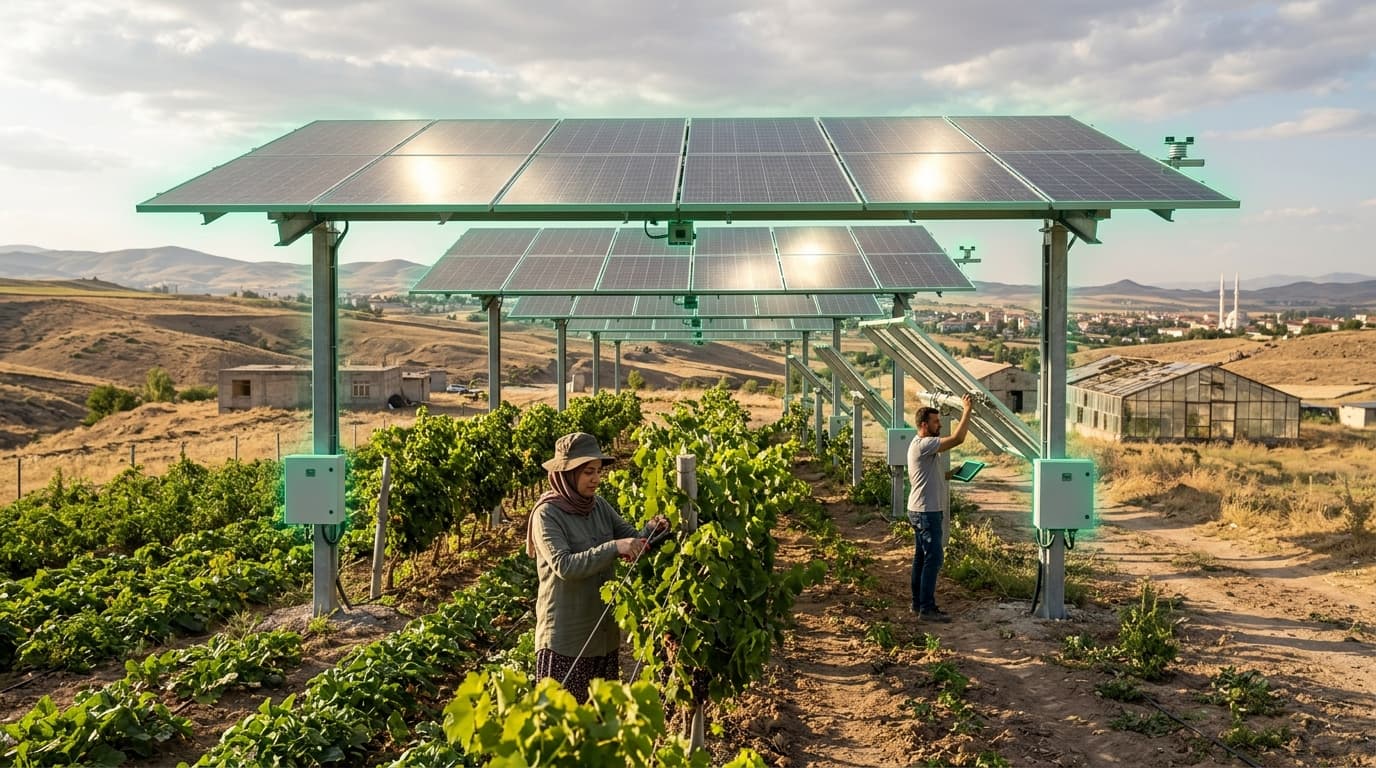
Agrivoltaic systems — the co-location of solar panels and agricultural production on the same land — are being researched and piloted across Turkey's Anatolian agricultural regions. With more than half of Turkey's land area used for agriculture and solar capacity growing at record rates, agrivoltaics address the potential land-use conflict between food production and energy generation. Peer-reviewed research has demonstrated the viability of these systems in Turkish climatic conditions.
Turkey's geography is particularly suited to agrivoltaics: the central Anatolian plateau receives high solar irradiation while supporting major cereal, legume, and fruit production. Solar panels can provide partial shade that reduces crop water consumption in drought-prone regions, while crops beneath panels benefit from slightly cooler microclimate conditions. This synergy is especially valuable as Turkey faces both energy import dependence and agricultural drought pressures simultaneously.
As Turkey pursues its target of quadrupling solar capacity to 120 GW combined with wind, agrivoltaics could resolve the land competition that might otherwise constrain deployment. The technology represents a convergence of Turkey's energy transition and food security agendas, potentially creating a distinctive Turkish model for agricultural solar deployment that could be exported to similarly climate-challenged Mediterranean and Middle Eastern countries.
Research this in Signals
Signals turns a topic into a sourced research record you can inspect and rerun. Your first scan is free, and this one starts with Agrivoltaic Systems Integration already loaded, so edit it or scan as is.