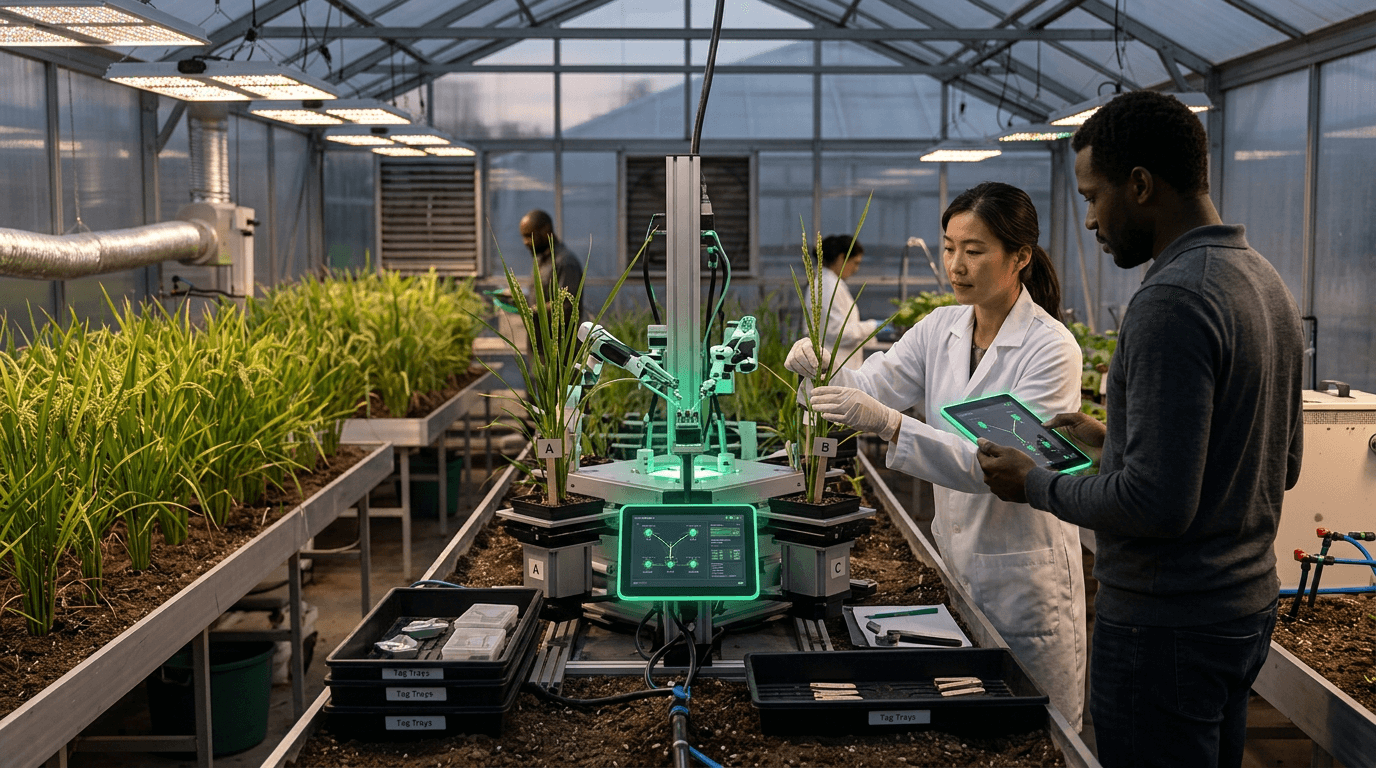
Tri-Parental Plant Breeding
Tri-parental plant breeding uses three genetic contributors—rather than two in conventional crossing—to generate new crop varieties. Techniques can involve cytoplasmic transfer (e.g. replacing the mitochondria or plastids of one line with those of another to introgress traits such as cytoplasmic male sterility or stress tolerance) or other schemes that combine nuclear and organellar genomes from multiple parents. The result is access to a broader gene pool and faster introgression of desirable traits without necessarily introducing transgenes. Applications target climate resilience, yield, and resistance to pests and diseases in staple and specialty crops.
The approach addresses the need for accelerated crop improvement as climate and pest pressures intensify, while offering a route that may face fewer regulatory or consumer barriers than genetic modification in some markets. By increasing genetic diversity in breeding populations, tri-parental methods can help break yield plateaus and improve adaptation to marginal or variable environments. Research is active in public and private breeding programmes; adoption will depend on validation of agronomic performance and regulatory classification in key jurisdictions.
Challenges include technical complexity, trait stability, and the need to combine tri-parental schemes with other breeding tools (markers, selection, speed breeding). As breeding pipelines integrate multiple technologies, tri-parental and related methods are likely to contribute to the toolkit for sustainable and resilient crop production.
Research this in Signals
Signals turns a topic into a sourced research record you can inspect and rerun. Your first scan is free, and this one starts with Tri-Parental Plant Breeding already loaded, so edit it or scan as is.