Industrial Saffron Cultivation and Processing Technology
Geography: Emea · Middle East · Iran
Iran dominates global saffron production, supplying over 90% of the world's output from approximately 100,000 hectares of cultivation, primarily in Khorasan province. Annual exports exceed 120,000 kg to more than 25 countries. The cultivation system represents millennia of accumulated agronomic knowledge adapted to arid conditions — saffron crocus requires specific temperature cycling, minimal water, and precise harvest timing. Iranian researchers have developed IoT-based greenhouse cultivation systems, mechanized stigma separation devices, and computer vision quality grading to modernize what remains largely a labor-intensive crop.
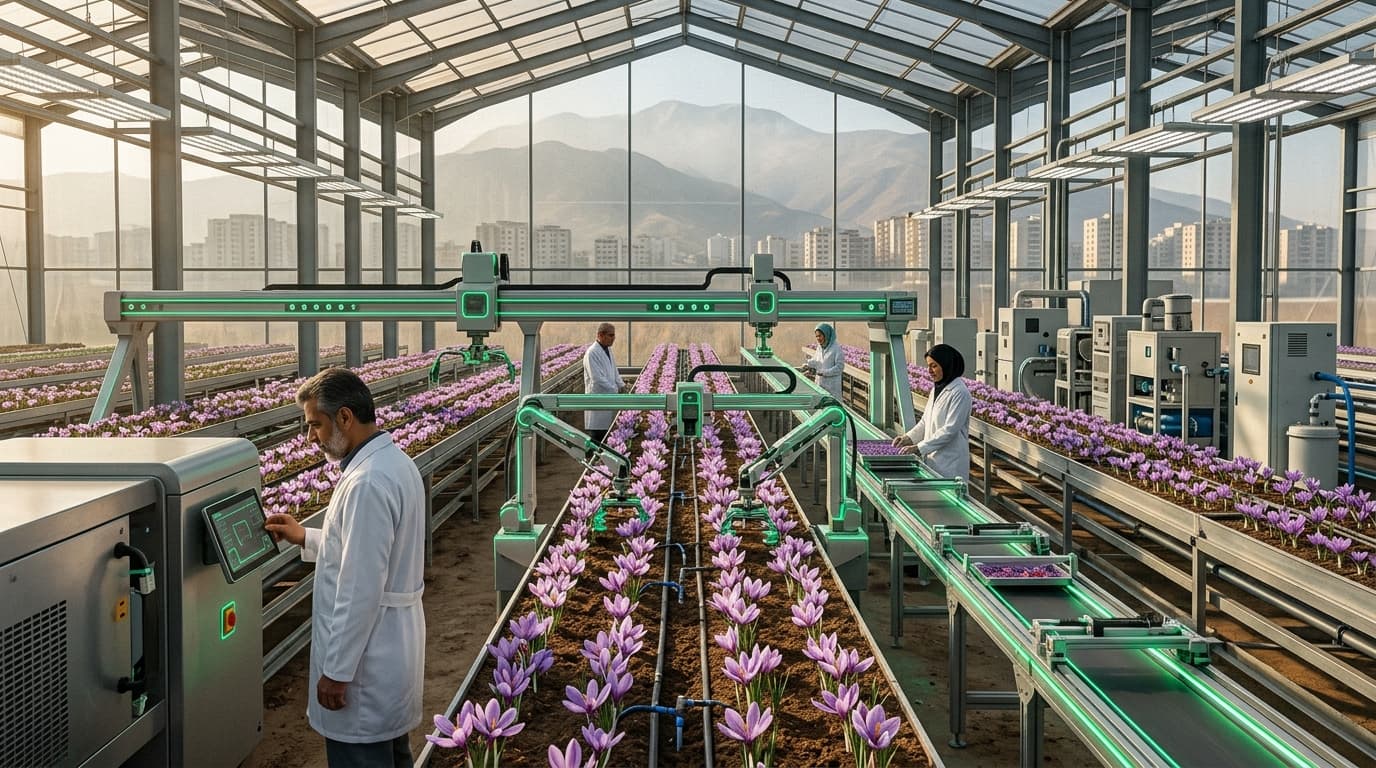
The technology challenge in saffron is distinct from most agricultural crops: each flower produces only three stigma threads, harvested by hand during a narrow two-week window at dawn. Mechanizing this process without damaging the delicate stigmas has driven innovation in precision robotics and computer vision at Iranian agricultural research institutes. Greenhouse cultivation systems using controlled temperature and light cycles have demonstrated the ability to produce saffron year-round, independent of seasonal constraints, with IoT sensors managing the precise environmental conditions the crocus requires.
Despite production dominance, Iran captures a disproportionately small share of saffron's $8+ billion global market value. Much Iranian saffron is exported in bulk to Spain, the UAE, and China, which repackage and rebrand it at significant markup. This value-chain gap has prompted investment in domestic processing, packaging, and branding technology, as well as quality certification systems. The agricultural biotechnology dimension includes tissue culture techniques for virus-free corm production and research into drought-adapted cultivars — critical as climate change threatens traditional growing regions.
Research this in Signals
Signals turns a topic into a sourced research record you can inspect and rerun. Your first scan is free, and this one starts with Industrial Saffron Cultivation and Processing Technology already loaded, so edit it or scan as is.