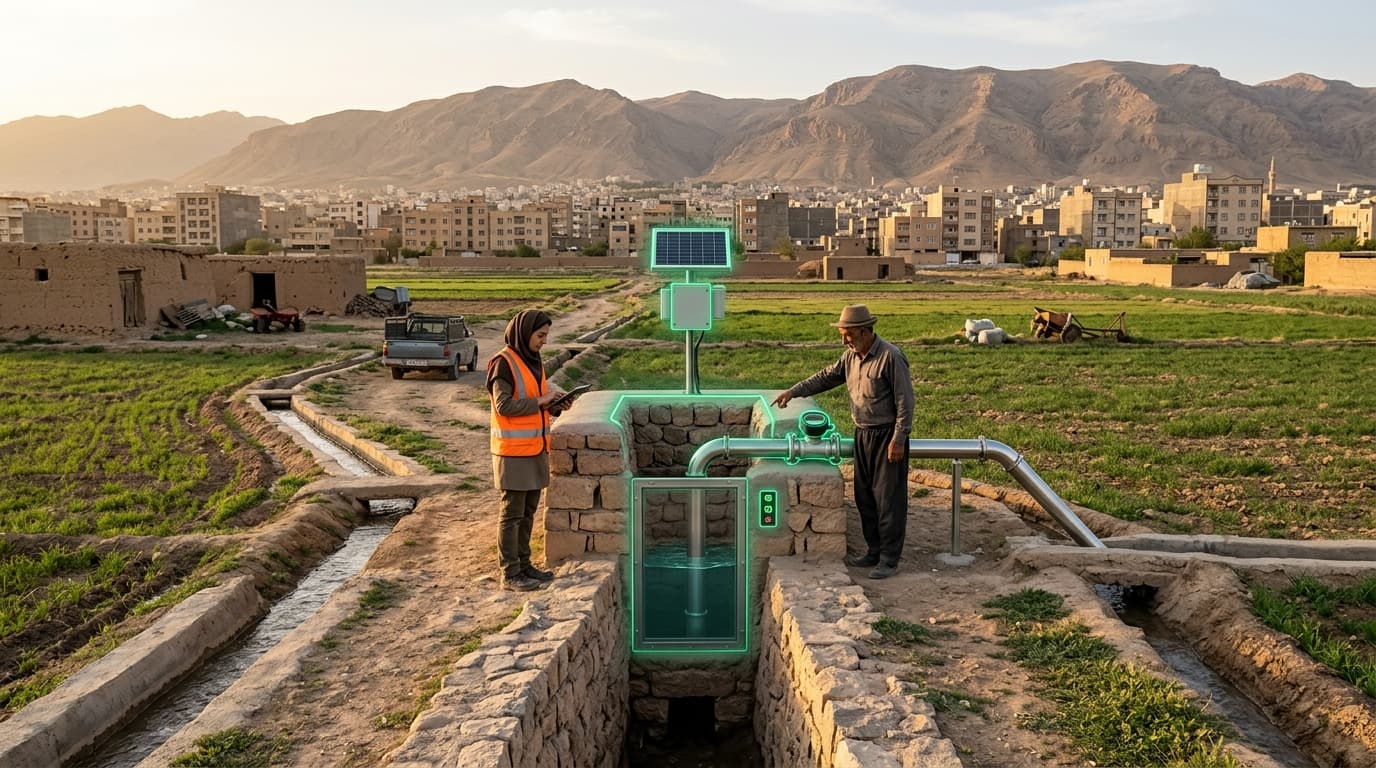
Qanat Water Infrastructure Revival and Modernization
Geography: Emea · Middle East · Iran
Iran is home to the world's largest and oldest system of qanats — underground channels that use gravity to transport groundwater from mountain aquifers to lowland settlements without any pumping energy. Historically numbering over 37,000, qanats represent a 3,000-year-old engineering tradition that sustained civilization on Iran's arid plateau. While many have fallen into disuse due to groundwater depletion and modern well-drilling, efforts to preserve, rehabilitate, and selectively modernize remaining qanats have increased as the water crisis deepens.
Qanats are remarkable engineering systems: they consist of vertical shafts connected by a gently sloping underground channel that can extend for tens of kilometers. The construction and maintenance requires specialized knowledge passed through generations of master builders (moqannis). UNESCO has recognized 11 Iranian qanats as World Heritage Sites, and the technology is studied internationally as a model of sustainable water management in arid environments.
The contemporary relevance of qanat technology lies in its sustainability: qanats tap only the naturally replenishing overflow of aquifers, unlike modern wells that extract water faster than it is replaced. As Iran's groundwater crisis intensifies — driven by decades of unregulated pumping and dam construction — there is growing recognition that traditional water management systems may offer insights for sustainable approaches. However, rehabilitation faces challenges: many qanats have been physically damaged by road construction and urban development, and the traditional moqanni profession is declining.
Research this in Signals
Signals turns a topic into a sourced research record you can inspect and rerun. Your first scan is free, and this one starts with Qanat Water Infrastructure Revival and Modernization already loaded, so edit it or scan as is.