Large-Scale Desalination and Water Transfer Systems
Geography: Emea · Middle East · Iran
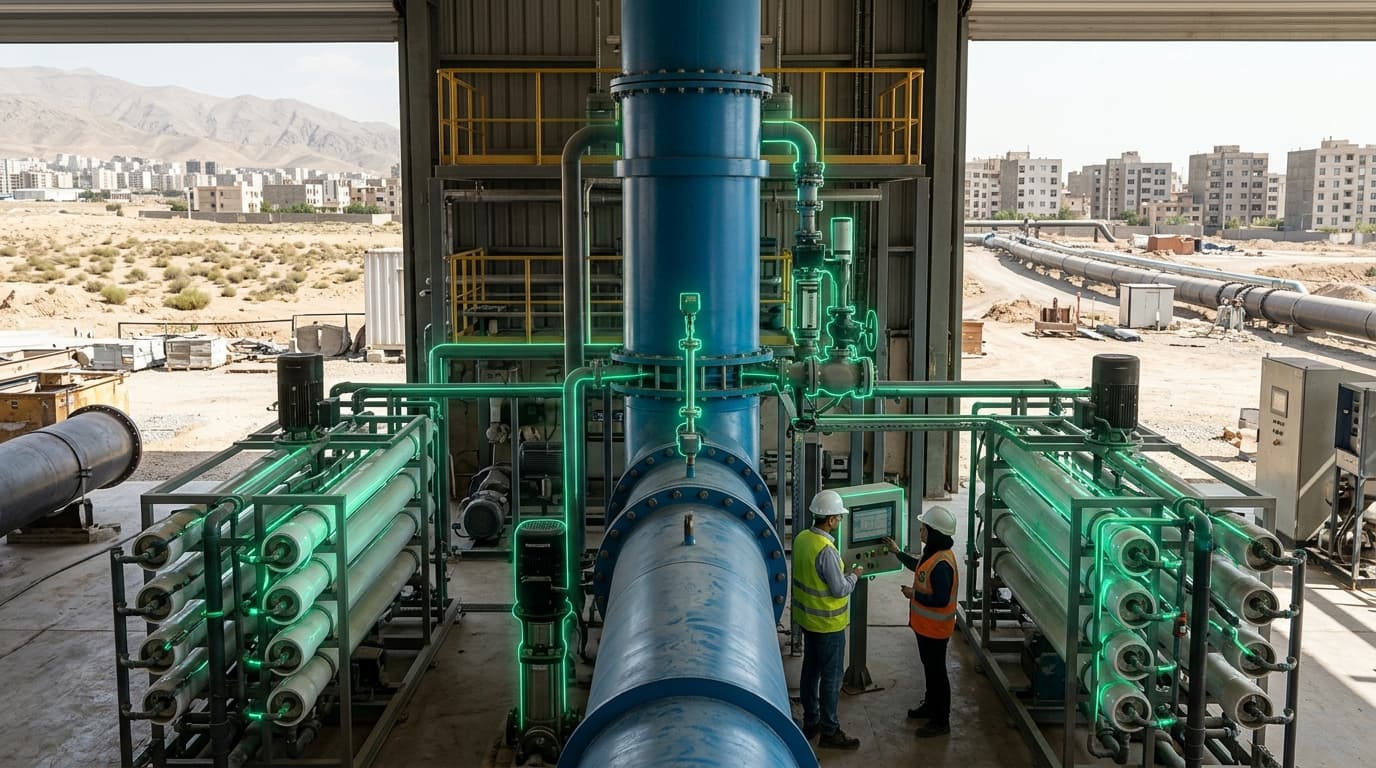
Iran is constructing one of the world's largest water transfer and desalination projects: a system that desalinates seawater from the Persian Gulf and pumps it through approximately 2,300 miles (3,700 km) of pipelines to water-scarce provinces in the central plateau and east. The first segment to Isfahan opened recently. The project incorporates domestically developed reverse osmosis membrane technology, developed in part through Iran's nanotechnology program. Additional desalination plants serve coastal provinces directly.
The project addresses what may be Iran's most existential non-military challenge: a water crisis driven by climate change, over-extraction of groundwater, and population growth. Iran's central plateau and eastern provinces face severe and worsening water stress, with groundwater tables dropping dramatically. Lake Urmia, once the largest lake in the Middle East, has shrunk to a fraction of its original size. The desalination pipeline is a technological response to a crisis that has already displaced populations and caused agricultural collapse in some regions.
Iranian officials highlight the project as evidence of innovation under sanctions, noting the use of domestically produced reverse-osmosis components. However, the Stimson Center and other analysts note the approach is a stopgap rather than a structural solution — it addresses symptoms of water mismanagement (excessive agricultural irrigation, dam-driven aquifer depletion) rather than root causes. The energy intensity of large-scale desalination and long-distance pumping is also significant. Nonetheless, the engineering achievement of building a continental-scale water transfer system under sanctions is substantial.
Research this in Signals
Signals turns a topic into a sourced research record you can inspect and rerun. Your first scan is free, and this one starts with Large-Scale Desalination and Water Transfer Systems already loaded, so edit it or scan as is.