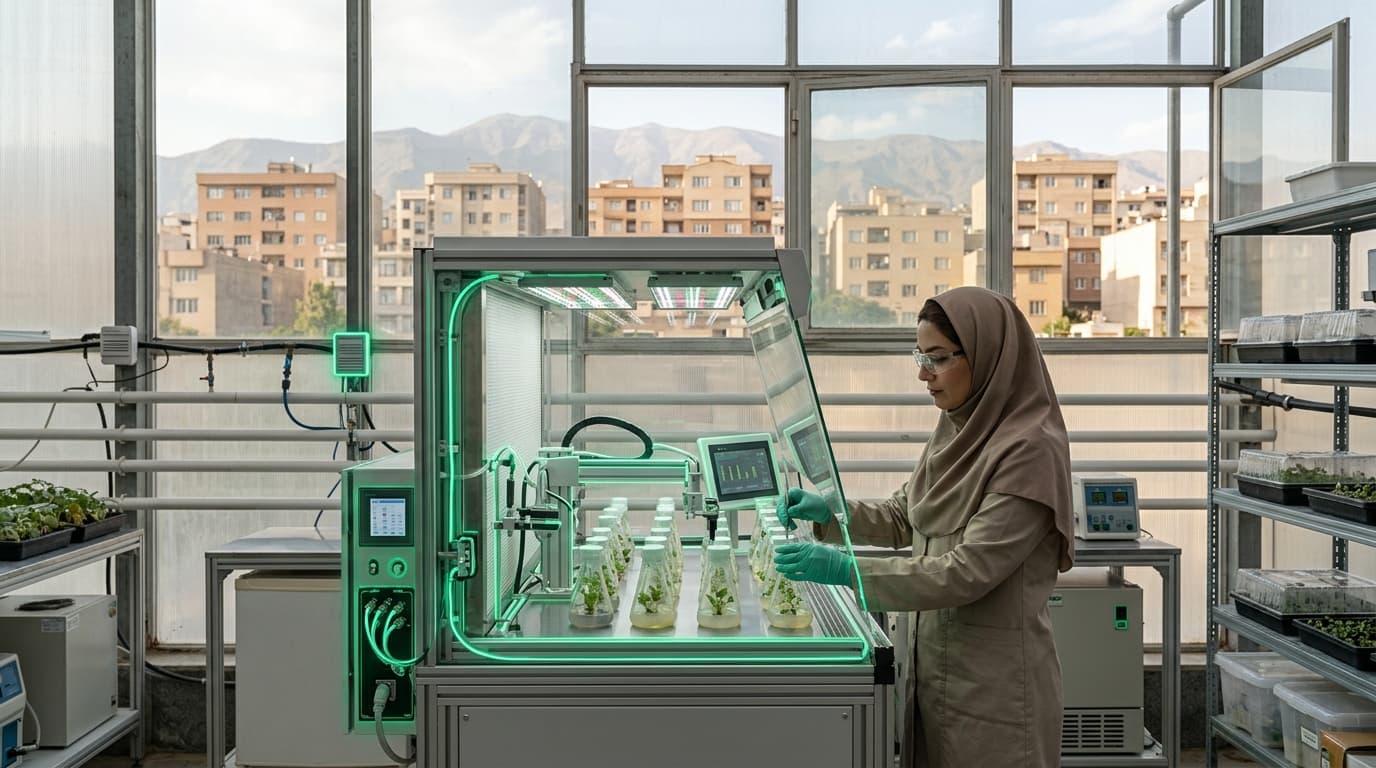
Agricultural Biotechnology and Plant Tissue Culture
Geography: Emea · Middle East · Iran
The Agricultural Biotechnology Research Institute of Iran (ABRII) leads a national program applying modern biotechnology to Iran's critical food security challenges. Key achievements include production of virus-free potato mini-tubers and micro-tubers through tissue culture, clonal propagation of pistachio and olive cultivars, transgenic cotton with resistance to bollworm (Helicoverpa), and development of drought-adapted wheat and barley varieties using marker-assisted selection. These programs address the dual pressures of water scarcity and population growth on Iran's agricultural output.
The pistachio application is particularly strategic: Iran is the world's second or third-largest pistachio producer (competing with the US and Turkey), and pistachios are a major agricultural export earning hundreds of millions of dollars annually. Tissue culture techniques allow rapid multiplication of elite pistachio rootstock varieties resistant to soil-borne diseases, while biotechnology-assisted breeding accelerates development of drought-tolerant cultivars suited to Iran's increasingly arid growing conditions. Similar programs target saffron corm health, date palm propagation, and cumin improvement.
The broader significance lies in applying advanced biology to climate adaptation for a country facing some of the world's most severe agricultural water stress. With groundwater tables falling across major agricultural regions and rainfall declining, conventional breeding timelines are too slow. Iran's agricultural biotech capacity — though constrained by limited GMO regulatory approval for field deployment — provides tools for accelerated crop improvement. The infrastructure includes BSL-2 laboratories, growth chambers, greenhouse facilities, and molecular biology platforms across multiple research institutes, creating a foundation that extends beyond any single crop application.
Research this in Signals
Signals turns a topic into a sourced research record you can inspect and rerun. Your first scan is free, and this one starts with Agricultural Biotechnology and Plant Tissue Culture already loaded, so edit it or scan as is.