






Waste
This page is a narrower case of it.
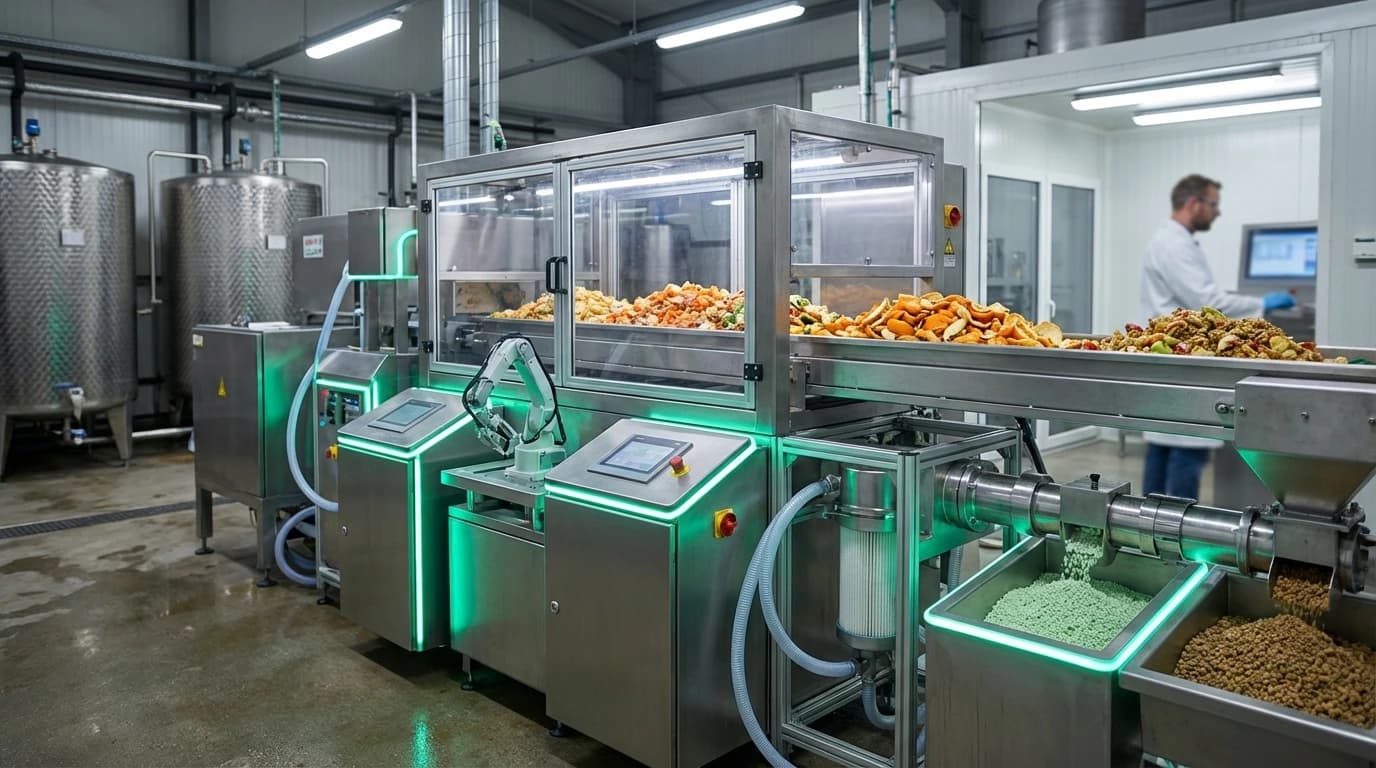
Food waste valorization represents a systematic approach to transforming agricultural byproducts and surplus produce into valuable materials and ingredients, addressing one of the most pressing challenges in modern food systems. Rather than treating peels, pulp, stems, and other organic residues as waste destined for landfills or composting, this technology employs various biochemical, thermochemical, and biotechnological processes to extract and convert these materials into marketable products. The technical mechanisms vary depending on the feedstock and desired output: enzymatic hydrolysis can break down cellulose-rich peels into fermentable sugars for bioplastic production, while controlled fermentation processes convert fruit and vegetable waste into protein-rich animal feed or insect cultivation substrates. Extraction techniques can isolate valuable compounds like pectin from citrus peels, antioxidants from grape pomace, or dietary fibers from various plant residues, creating high-value ingredients for food, pharmaceutical, and cosmetic industries.
The food industry faces mounting pressure from both regulatory frameworks and consumer expectations to reduce waste while improving sustainability metrics. Current estimates suggest that roughly one-third of all food produced globally is lost or wasted, representing not only an economic inefficiency but also a significant environmental burden through methane emissions from decomposing organic matter. Food waste valorization directly addresses these challenges by creating economic incentives for waste reduction, transforming disposal costs into revenue opportunities. Regional processing hubs are emerging as particularly effective models, aggregating waste streams from multiple producers to achieve the economies of scale necessary for viable conversion operations. This approach enables smaller farms and food processors to participate in valorization without investing in their own processing infrastructure, while simultaneously reducing transportation emissions by keeping materials within local or regional circuits.
Early commercial deployments are demonstrating the viability of various valorization pathways across different agricultural contexts. Citrus processing facilities are increasingly extracting essential oils and pectin from peels before converting remaining residues into animal feed supplements or biogas feedstock. Breweries and distilleries are partnering with insect farming operations to transform spent grain into high-protein feed for aquaculture and poultry production. Research initiatives are exploring more advanced applications, including the conversion of coffee grounds into biodegradable packaging materials and the extraction of natural colorants from vegetable processing waste. As circular economy principles gain traction and technologies mature, food waste valorization is positioned to become a standard component of agricultural supply chains rather than an experimental add-on. This shift aligns with broader industry movements toward regenerative agriculture and zero-waste production systems, where every output from one process becomes a valuable input for another, fundamentally reimagining the relationship between food production and resource efficiency.
Manufacturer of Piñatex, a natural textile made from pineapple leaf fiber, a byproduct of existing agriculture.

Full Cycle Bioplastics
United States · Company
Converts organic waste into Polyhydroxyalkanoate (PHA), a fully biodegradable bioplastic.
Upcycles byproducts from plant-based milk production (okara) into high-fiber flours and baking mixes.
Trade association establishing standards and certification (Upcycled Certified™) for food waste valorization products.
Develops natural preservatives (chitosan) extracted from the stems of white button mushrooms which are usually discarded.
Materials science company converting crop residues (Agraloop) into high-value natural fibers for the fashion industry.
Danish bioscience company upcycling spent coffee grounds into oils, flour, and active ingredients for cosmetics and food.
Biotechnology company that re-engineers agricultural waste (like spoiled milk) into plastic-alternative packaging films.
Creates 'Vivomer', a vegan, compostable packaging material derived from microbial fermentation of food waste.
Food tech company valorizing surplus bread and fruit peels into beverages like beer and sparkling water.
Published forecasts about this technology, graded against what happened in Hindsight.
Waste
This page is a narrower case of it.
Signals turns a topic into a sourced research record you can inspect and rerun. Your first scan is free, and this one starts with Food Waste Valorization already loaded, so edit it or scan as is.