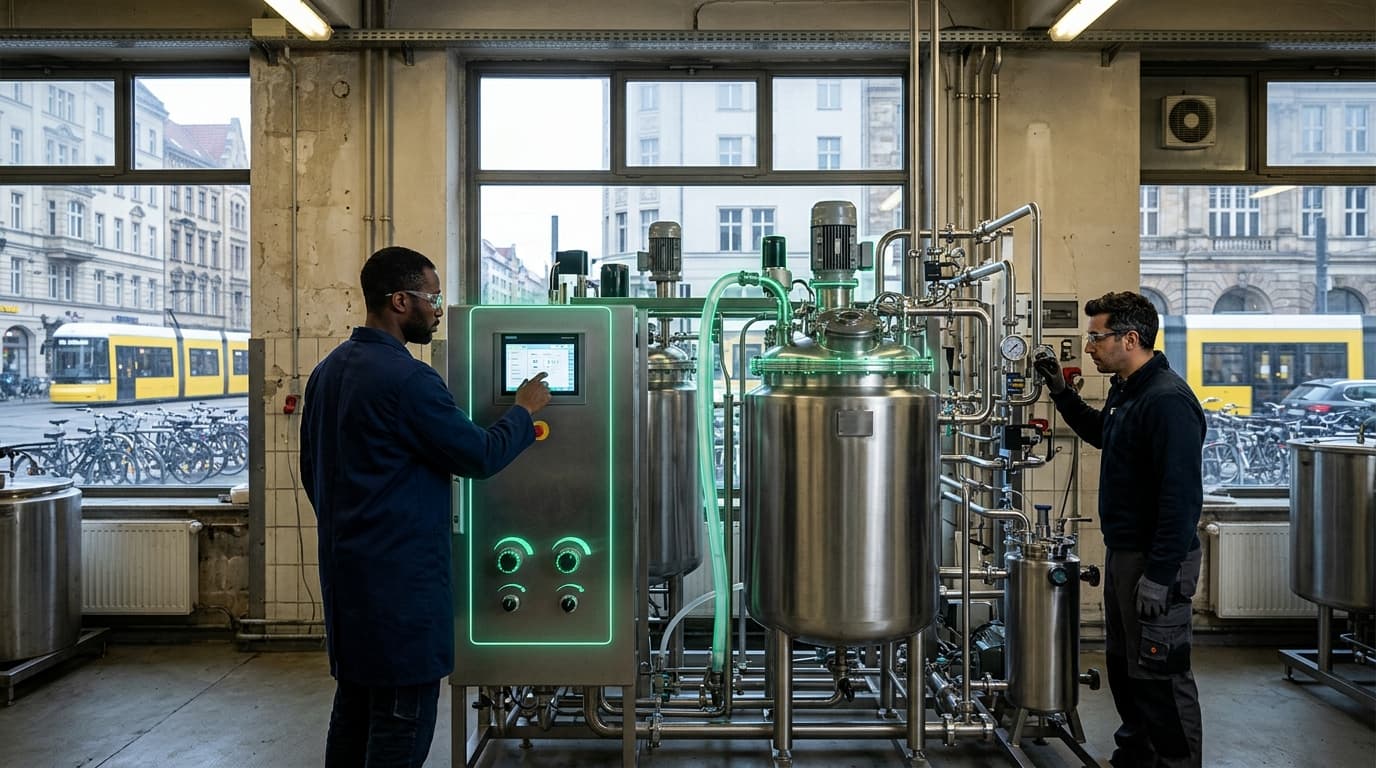
Precision Fermentation for Food
Geography: Emea · Europe · Europe
European precision fermentation startups are engineering microorganisms (yeast, bacteria, fungi) to produce specific food proteins, fats, and flavors identical to those from animals — without the animal. Companies across Denmark, the Netherlands, Germany, and Finland are producing casein (milk protein), whey, collagen, egg white, and cocoa butter through fermentation, with several products approaching market readiness. European companies raised €120M in 2024, more than tripling 2023 investment.
The technology uses synthetic biology to insert genes encoding desired proteins into microorganisms, which then produce the target molecule during fermentation — the same industrial process used for decades to make insulin, enzymes, and amino acids. The difference is applying this at food scale. Denmark leads with its national Green Protein Strategy and Action Plan for Plant-based Foods, while the EU's updated EFSA novel food pathway (early 2025) is creating clearer regulatory routes for fermented proteins.
Food Fermentation Europe, a new trade association launched in January 2025, signals the sector's maturation from lab curiosity to industrial reality. The strategic implications are profound for Europe's agricultural economy: precision fermentation could produce dairy proteins at a fraction of the land, water, and emissions footprint of dairy farming — potentially restructuring European agriculture's largest sector. The EU's regulatory approach will determine whether European companies lead this transition or whether products are imported from the US and Israel, where regulatory approval is faster.
Research this in Signals
Signals turns a topic into a sourced research record you can inspect and rerun. Your first scan is free, and this one starts with Precision Fermentation for Food already loaded, so edit it or scan as is.