Weather Modification Technology (Cloud Seeding)
Geography: Asia Pacific · East Asia · China
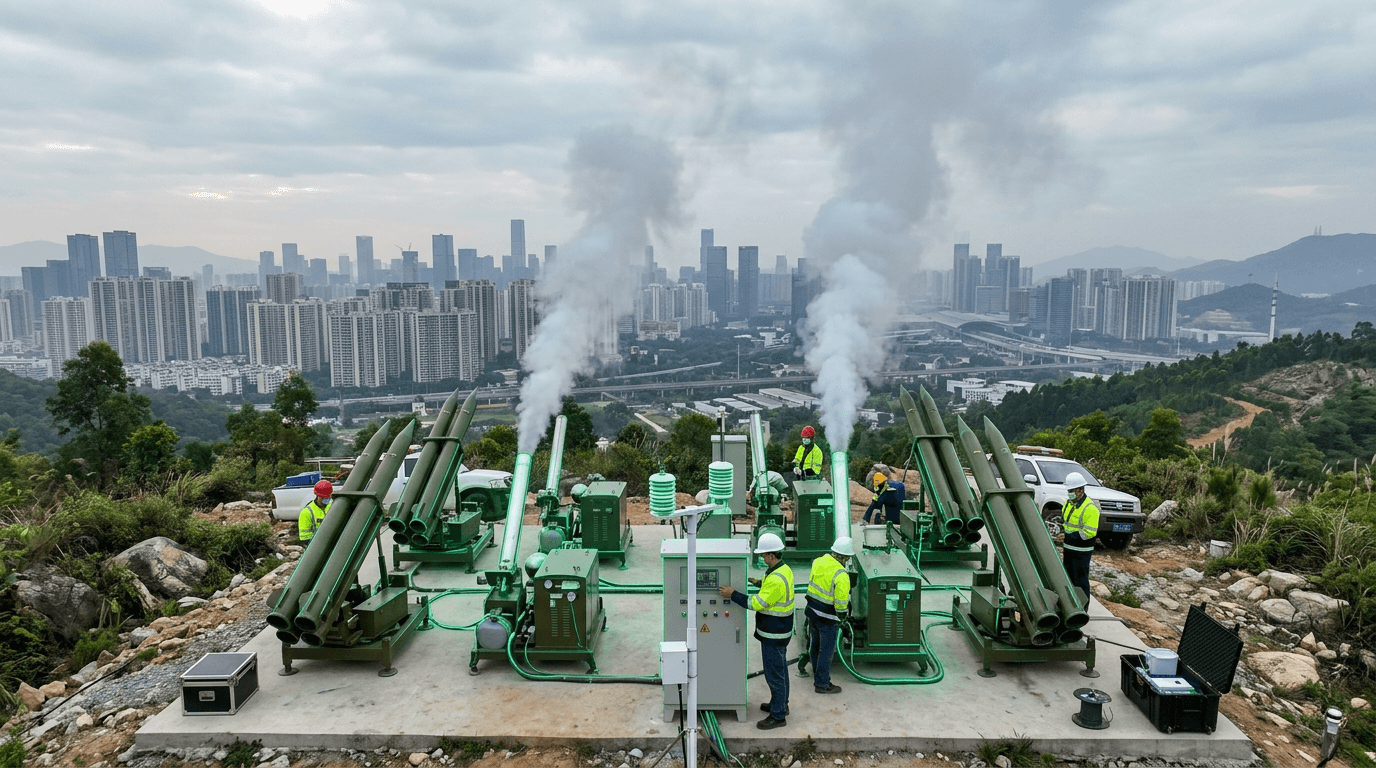
China's weather modification program is the world's largest by every metric. The State Council committed to covering 5.5 million square kilometers with artificial rainfall and 580,000 square kilometers with hail suppression by 2025. The Tianhe ('Sky River') project aims to create water vapor channels from the Tibetan Plateau to northern China using thousands of ground-based burners that release silver iodide particles into passing clouds.
The technology combines ground-based generators, aircraft-mounted seeding systems, and anti-aircraft guns repurposed to fire silver iodide shells into clouds. China employs roughly 35,000 people in weather modification operations across nearly every province. The program is used for drought relief, hail suppression, wildfire management, and ensuring clear skies for major events — the 2008 Beijing Olympics famously used cloud seeding to prevent rain during the opening ceremony.
The BBC reported in February 2026 on the program's controversial expansion. Weather modification at this scale raises cross-border concerns: if China induces rainfall over its territory, neighboring countries may receive less. India and Southeast Asian nations have expressed concerns about the downstream effects on monsoon patterns. The technology itself is proven; the governance framework for planet-scale weather engineering is not.
Research this in Signals
Signals turns a topic into a sourced research record you can inspect and rerun. Your first scan is free, and this one starts with Weather Modification Technology (Cloud Seeding) already loaded, so edit it or scan as is.