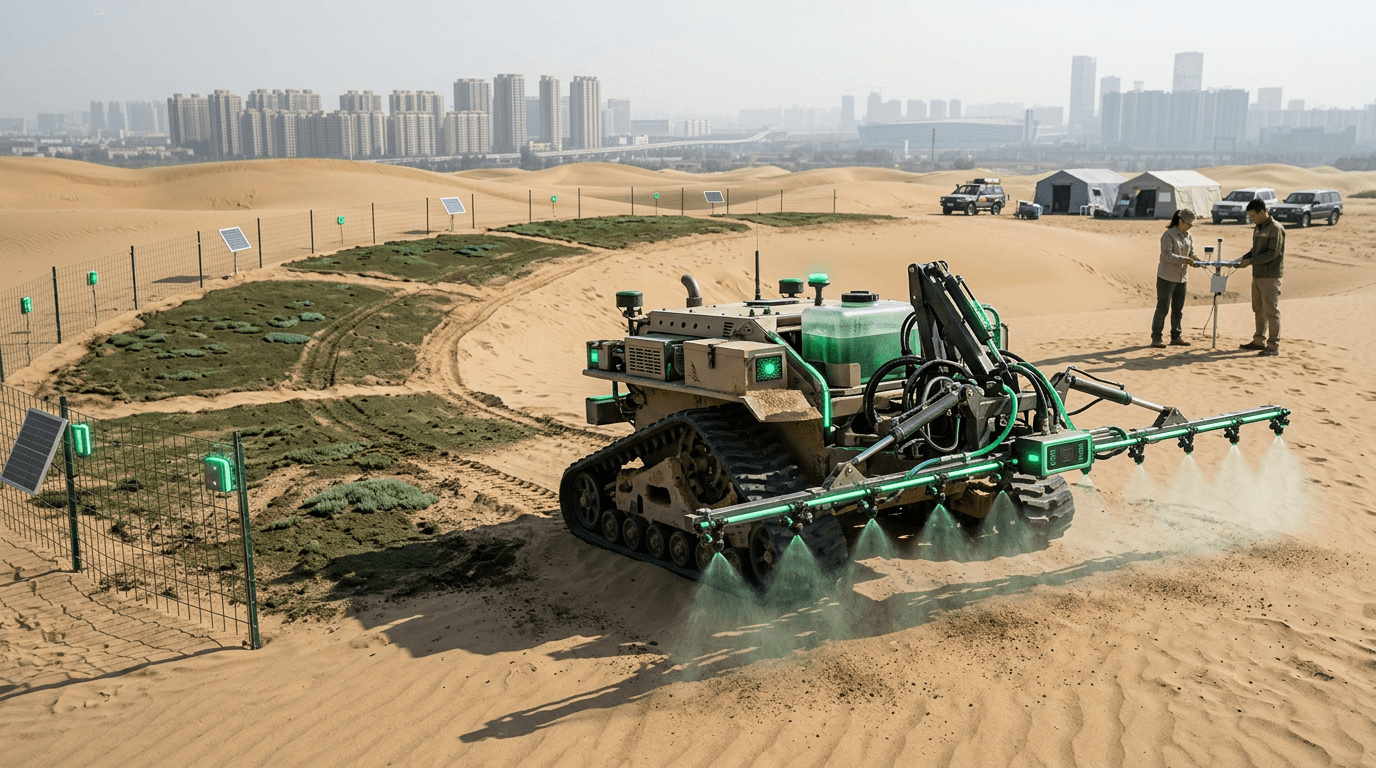
Desert-to-Soil Cyanobacteria Technology
Geography: Asia Pacific · East Asia · China
Researchers at the Chinese Academy of Sciences developed solid 'soil seeds' — tablets of lab-grown cyanobacteria that, when sprayed onto desert sand with water, bind the grains together and create a biological crust. Within months, the crust develops enough organic matter and water-retention capacity to support plant growth.
The science is decades old — cyanobacteria have been forming biological soil crusts naturally for billions of years. China's innovation is industrial-scale production and deployment across its northern deserts. Combined with shifting rainfall patterns pushing the 400mm precipitation line northward, entire regions of the Gobi and Taklamakan deserts are becoming reclaimable.
The constraint is water. Cyanobacteria need initial moisture to establish, and maintaining plant growth in former desert requires irrigation. The technology works best where natural precipitation is increasing or where water infrastructure can be built.
Research this in Signals
Signals turns a topic into a sourced research record you can inspect and rerun. Your first scan is free, and this one starts with Desert-to-Soil Cyanobacteria Technology already loaded, so edit it or scan as is.