Screenless Display
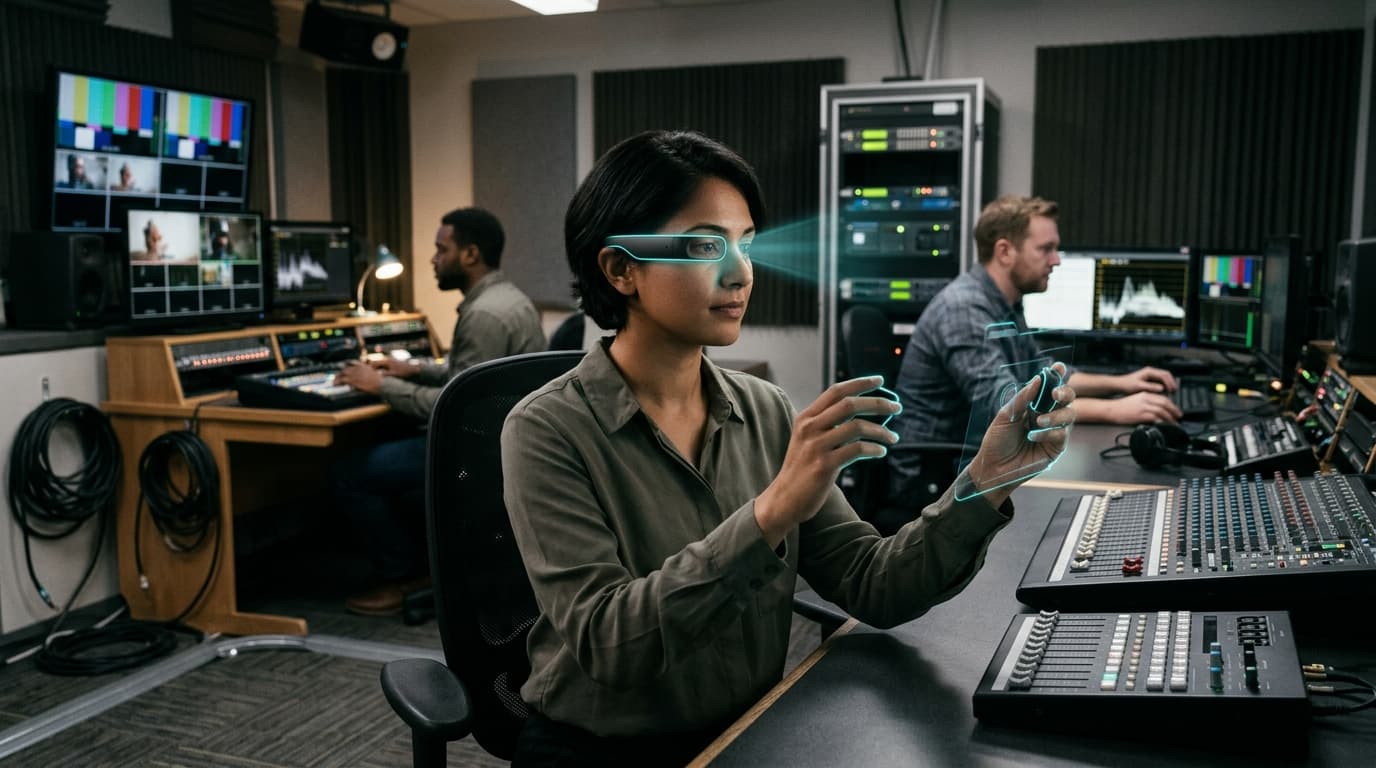
Screenless displays project images directly onto the retina, into the eye via contact lens, or into the environment without a physical screen. Virtual retinal displays (VRD) use scanned laser or LED beams to paint images on the retina; bionic contact lenses embed micro-displays or projectors; augmented reality headsets (Google Glass, Microsoft HoloLens) overlay imagery via waveguide optics. Applications include assistive devices for the visually impaired, AR glasses, and future interfaces where displays become invisible or embedded. Experiments and limited commercialization exist; mainstream adoption remains emerging.
Display technology seeks to merge digital content with physical reality. Screenless approaches eliminate the screen as discrete object: content appears in the world or on the retina. Challenges include form factor, power, eye safety, and optical quality. Research continues into waveguide efficiency, contact lens power and optics, and retinal projection safety. Screenless displays represent a frontier for immersive and ubiquitous computing.
Research this in Signals
Signals turns a topic into a sourced research record you can inspect and rerun. Your first scan is free, and this one starts with Screenless Display already loaded, so edit it or scan as is.