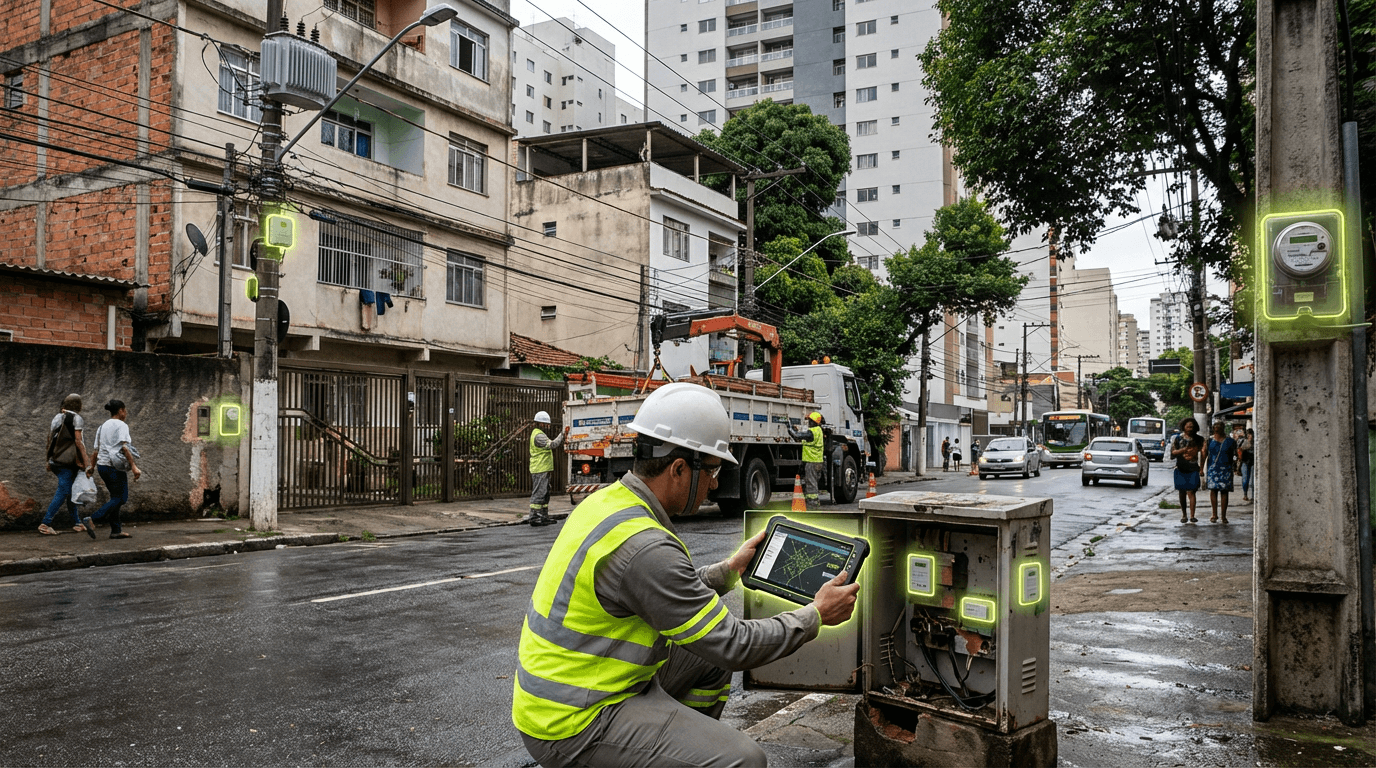
Gestão de Interrupções e Recomposição
Outage Management Systems (OMS) represent a sophisticated integration of network sensors, customer reporting channels, and geospatial analytics designed to detect, locate, and resolve service interruptions in essential infrastructure networks. These systems work by continuously monitoring grid signals and automatically correlating anomalies with geographic data to pinpoint failure locations with precision. When an outage occurs, the platform aggregates information from multiple sources—including automated meter infrastructure, SCADA systems, customer service calls, and mobile applications—to create a comprehensive real-time map of affected areas. Advanced algorithms then analyse this data to determine the root cause, estimate the number of impacted customers, and generate optimal dispatch routes for field crews. The system's core strength lies in its ability to transform fragmented information streams into actionable intelligence, enabling utilities to move from manual, phone-based outage detection to automated, data-driven response protocols.
The fundamental challenge these systems address is the inefficiency and customer dissatisfaction inherent in traditional reactive outage management. Without integrated OMS platforms, utilities often rely on customer calls to identify problems, leading to delayed response times, duplicated efforts, and poor resource allocation during critical events. This becomes particularly problematic during widespread outages caused by severe weather, where the volume of simultaneous failures can overwhelm conventional coordination methods. Modern OMS platforms solve these limitations by providing utilities with predictive capabilities, automated crew dispatch, and dynamic resource reallocation based on priority criteria such as critical infrastructure, number of affected customers, or estimated restoration time. The technology also enables more transparent communication with consumers through automated notifications about outage status and estimated restoration times, significantly improving the customer experience during service disruptions.
In Brazil, where regulatory metrics like DIC (Duration of Individual Interruption) and FIC (Frequency of Individual Interruption) directly impact utility performance ratings and penalties, OMS adoption has become increasingly strategic. Distribution companies serving regions prone to severe storms, flooding, or equipment failures are implementing these platforms to meet continuity standards and reduce financial exposure. Early deployments indicate substantial improvements in mean time to restoration, with some utilities reporting reductions of 30-40% in average outage duration. The technology is particularly valuable in areas experiencing more frequent extreme weather events, where rapid response capabilities can prevent cascading failures and minimize economic losses. As climate variability intensifies and customer expectations for reliability grow, OMS platforms are evolving from optional efficiency tools into essential infrastructure for modern utility operations, representing a fundamental shift toward proactive, data-driven service continuity management.
Related Organizations

Global specialist in energy management and automation that integrates cybersecurity into its industrial hardware and software.

The energy portfolio of GE (formerly GE Digital), offering Asset Performance Management (APM) software powered by AI.

Offers Oracle Utilities Network Management System (NMS), a leading platform for outage management and distribution optimization.

A global leader in HVDC technology, specifically HVDC Light (VSC), supplying converter stations for major interconnectors worldwide.
Industrial giant offering the 'Senseye Predictive Maintenance' suite and MindSphere IoT platform.
CPFL Energia
Brazil · Company
One of Brazil's largest non-state-owned electric energy groups, heavily investing in smart grid and ADMS.
Neoenergia
Brazil · Company
A subsidiary of Iberdrola, actively deploying smart grids and automation in Brazil.
Survalent
Canada · Company
Provides ADMS systems specifically tailored for municipal utilities and electric cooperatives.
Develops engineering and operations software, including a widely used OMS for rural electric cooperatives.
Deep tech startup providing real-time grid monitoring and flexibility management to prevent outages.
Supporting Evidence
Research this in Signals
Signals turns a topic into a sourced research record you can inspect and rerun. Your first scan is free, and this one starts with Gestão de Interrupções e Recomposição already loaded, so edit it or scan as is.