







Parametric Insurance
Parametric Insurance & Climate Risk Markets
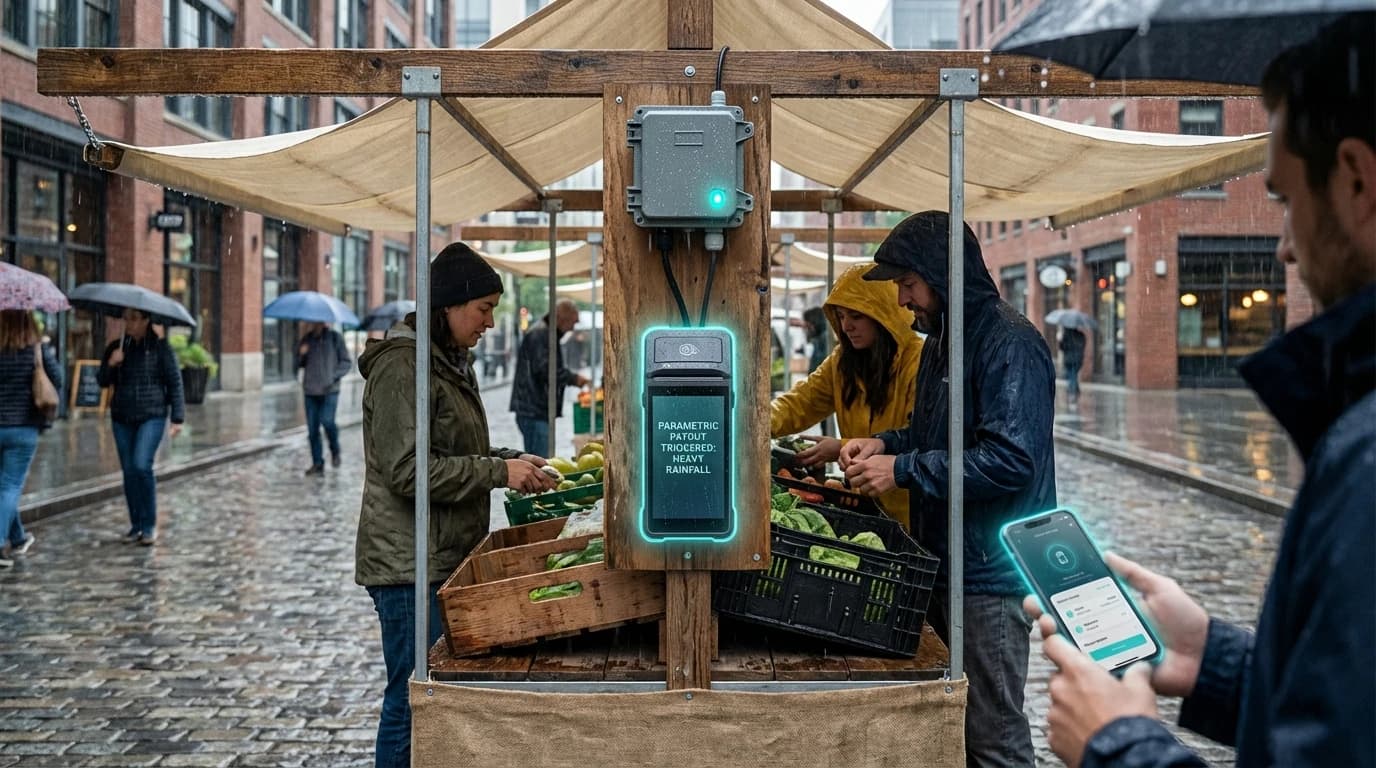
Insurance payouts triggered automatically by weather data and climate events via smart contracts
Parametric insurance and climate risk markets are insurance systems that use predefined triggers (specific conditions like rainfall amounts, wind speeds, or catastrophe indexes) sourced from trusted oracles (reliable data sources) to drive automatic payouts through smart contracts, eliminating the need for traditional claim adjustment processes where insurers investigate and verify losses. By linking directly to sensor and satellite data, these products can offer faster, more transparent coverage for climate risk (extreme weather events), agriculture (crop losses), and infrastructure (damage from disasters), creating insurance that pays out automatically when predefined conditions are met, making insurance more efficient and accessible for climate-related risks.
This innovation addresses the inefficiency of traditional insurance for climate risks, where claim adjustment is slow and expensive. By automating payouts, these systems can provide faster coverage. Insurance companies, blockchain projects, and climate risk platforms are developing these products.
The technology is particularly significant for climate risk management, where faster payouts can help communities recover more quickly. As climate risks increase, these products become increasingly important. However, ensuring oracle reliability, managing basis risk (difference between trigger and actual loss), and achieving adoption remain challenges. The technology represents an important evolution in insurance, but requires continued development to address reliability and adoption challenges. Success could improve climate risk coverage, but the technology must prove its reliability and value. Parametric insurance is an important innovation for climate risk management.
TRL
6/9Demonstrated
Impact
5/5
Investment
4/5
Category
Applications
Related Organizations
An open-source development platform for decentralized insurance applications.
Developer
A technology-led underwriter of parametric coverage for climate risks.
Deployer
A decentralized parametric insurance protocol dedicated to covering hacks and exploits.
Developer
Developed the Cross-Chain Interoperability Protocol (CCIP) to enable secure token transfers and messaging.
Developer
Insurtech developing parametric climate insurance solutions specifically for Latin America and the Caribbean.
Deployer
Uses internet-connected water sensors to provide instant payout flood insurance for commercial and residential properties.
Deployer
An insurtech company offering parametric insurance against climate risks using satellite data.
Deployer

Swiss Re
Switzerland · Company
Global reinsurance giant known for its 'CatNet' tool and research on closing the climate protection gap.
Investor
International financial institution providing loans and grants to governments.
Deployer
What was expected
Published forecasts about this technology, graded against what happened in Hindsight.
Supporting Evidence
Evidence data is not available for this technology yet.
Research this in Signals
Scan Parametric Insurance & Climate Risk Markets for yourself.
Signals turns a topic into a sourced research record you can inspect and rerun. Your first scan is free, and this one starts with Parametric Insurance & Climate Risk Markets already loaded, so edit it or scan as is.