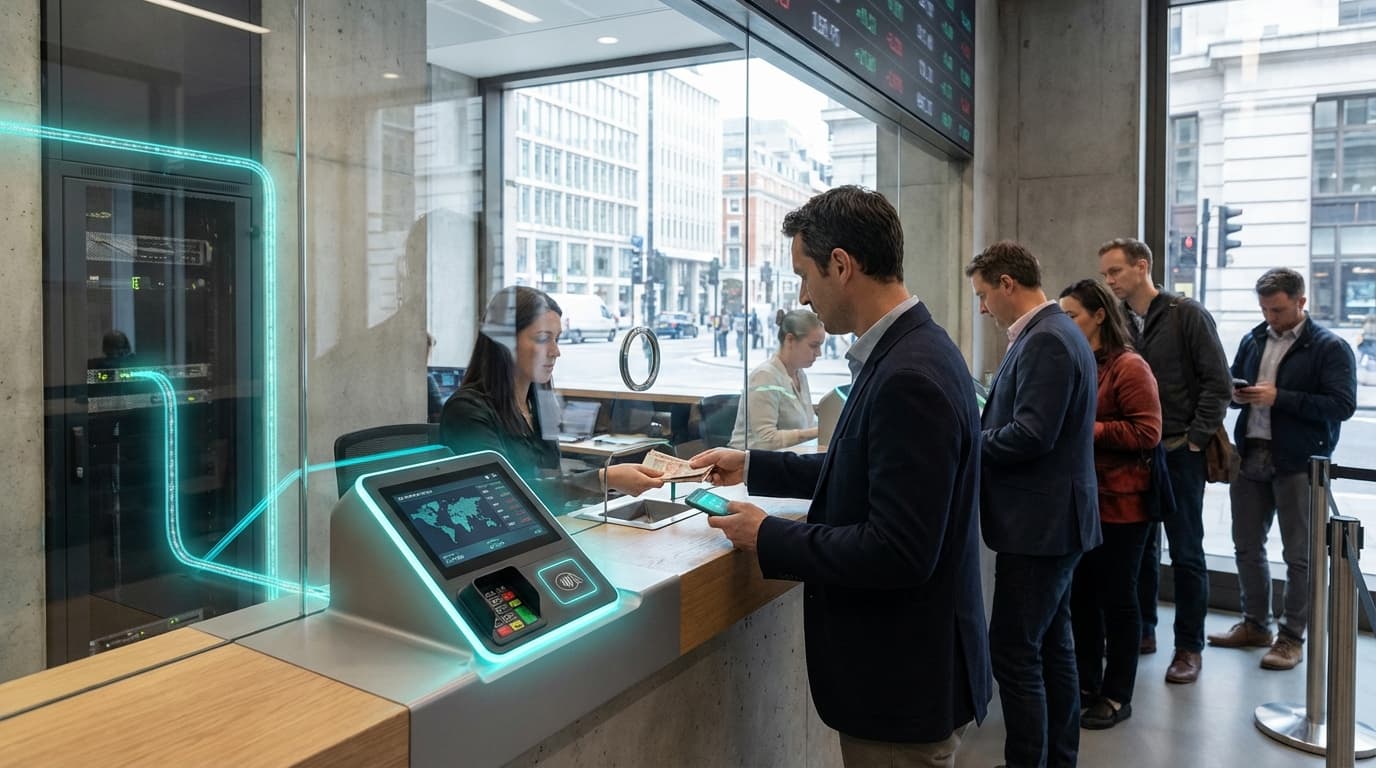
Cross-Border Remittance & FX Corridors
Cross-border remittance and FX (foreign exchange) corridors are payment systems that leverage stablecoins (cryptocurrencies pegged to stable assets like the US dollar), digital asset rails (blockchain-based payment networks), and local on/off-ramps (services that convert between cryptocurrencies and local currencies) to bypass slow, expensive correspondent banking chains (traditional networks of banks that process international payments). They enable near-real-time settlement of remittances (money sent by migrants to their home countries), B2B trade payments (business-to-business international payments), and treasury flows (corporate international money movement), while facing regulatory frictions (compliance challenges), capital controls (government restrictions on money movement), and local currency liquidity constraints (limited availability of local currencies), creating faster and cheaper international payment systems.
This innovation addresses the inefficiency of traditional cross-border payments, where transactions are slow and expensive. By using digital assets, these systems can provide faster and cheaper alternatives. Fintech companies, remittance providers, and blockchain projects are developing these capabilities.
The technology is particularly significant for improving cross-border payments, where faster and cheaper remittances can help millions of people. As these systems expand, they could transform international payments. However, ensuring regulatory compliance, managing liquidity, and achieving adoption remain challenges. The technology represents an important evolution in cross-border payments, but requires continued development to address regulatory and technical challenges. Success could significantly improve cross-border payments, but the technology must navigate complex regulatory environments. Cross-border payments are a major area of fintech innovation.
Related Organizations

Created the Cross-Chain Transfer Protocol (CCTP), a permissionless on-chain utility for burning and minting USDC across chains.

Real-time gross settlement system, currency exchange and remittance network.

A non-profit organization that supports the development and growth of the Stellar network.


A financial technology company that builds software to enable free and instant cross-border payments in Africa.


AirTM
Mexico · Company
A peer-to-peer marketplace used to exchange fiat currency for digital assets.


A chat-based remittance service for Latinos in the US to send money to Mexico.
United States · Company
A mobile wallet for the Celo network focused on global payments.
Supporting Evidence
Research this in Signals
Signals turns a topic into a sourced research record you can inspect and rerun. Your first scan is free, and this one starts with Cross-Border Remittance & FX Corridors already loaded, so edit it or scan as is.