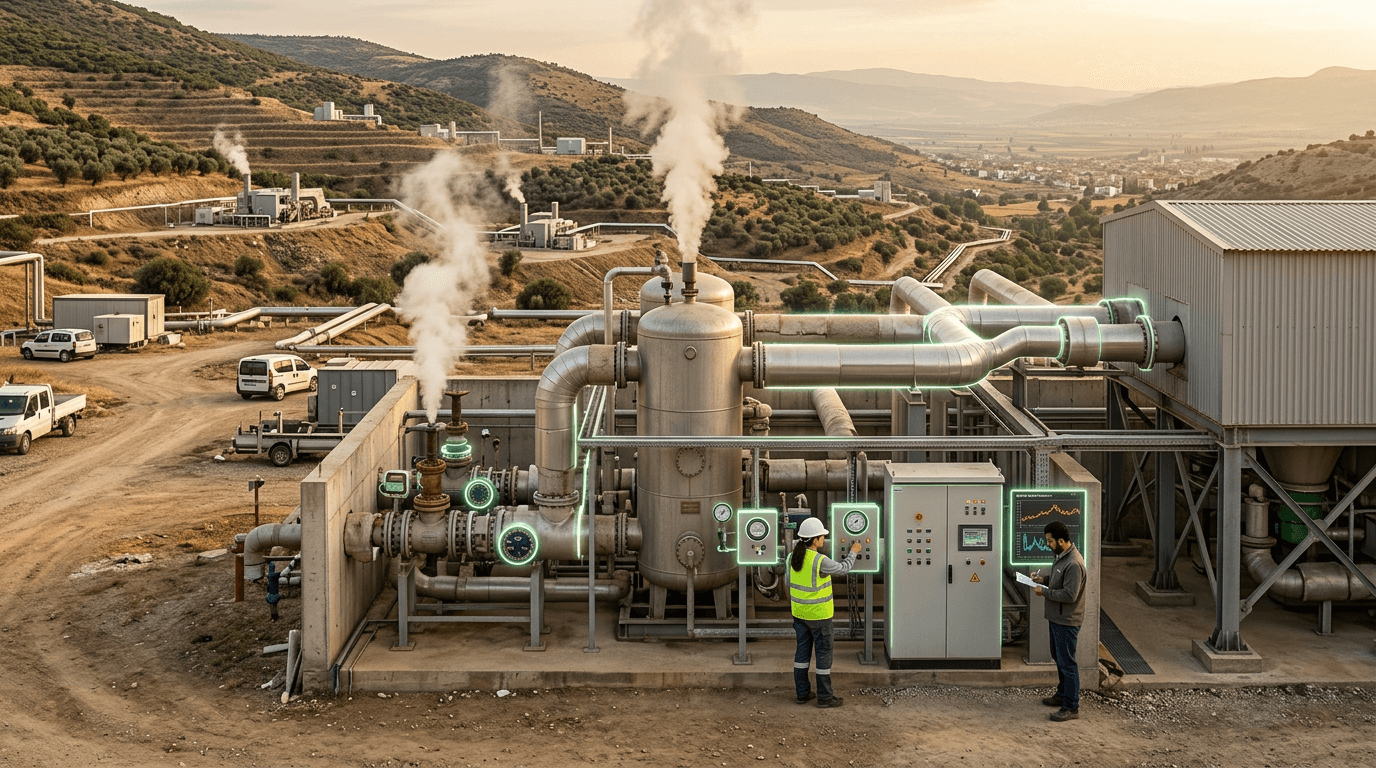
Geothermal Power Generation
Geography: Emea · Middle East · Turkey
Turkey ranks fourth globally in installed geothermal power capacity at approximately 4.5 GW, generating about 3% of the nation's electricity. The country's geothermal potential is concentrated in western Anatolia along tectonic fault lines, with approximately 38% of the estimated potential currently utilized. Beyond electricity, geothermal resources provide district heating for cities like Denizli and Afyon, greenhouse heating for agriculture, and thermal tourism.
Geothermal energy provides baseload renewable power — unlike solar and wind, it generates continuously regardless of weather conditions. This characteristic makes it valuable for grid stability as Turkey rapidly scales intermittent renewables. Turkey's achievement in building significant geothermal capacity has been accomplished largely through domestic drilling and engineering expertise, creating an indigenous capability that is now exported to other geothermally active regions.
With only 38% of potential utilized, substantial expansion room remains. The challenge lies in the economics of deeper drilling and the geographic concentration of resources in western Turkey. However, as electricity demand grows and grid decarbonization pressures increase, geothermal's reliable output profile becomes increasingly valuable as a complement to solar and wind.
Research this in Signals
Signals turns a topic into a sourced research record you can inspect and rerun. Your first scan is free, and this one starts with Geothermal Power Generation already loaded, so edit it or scan as is.