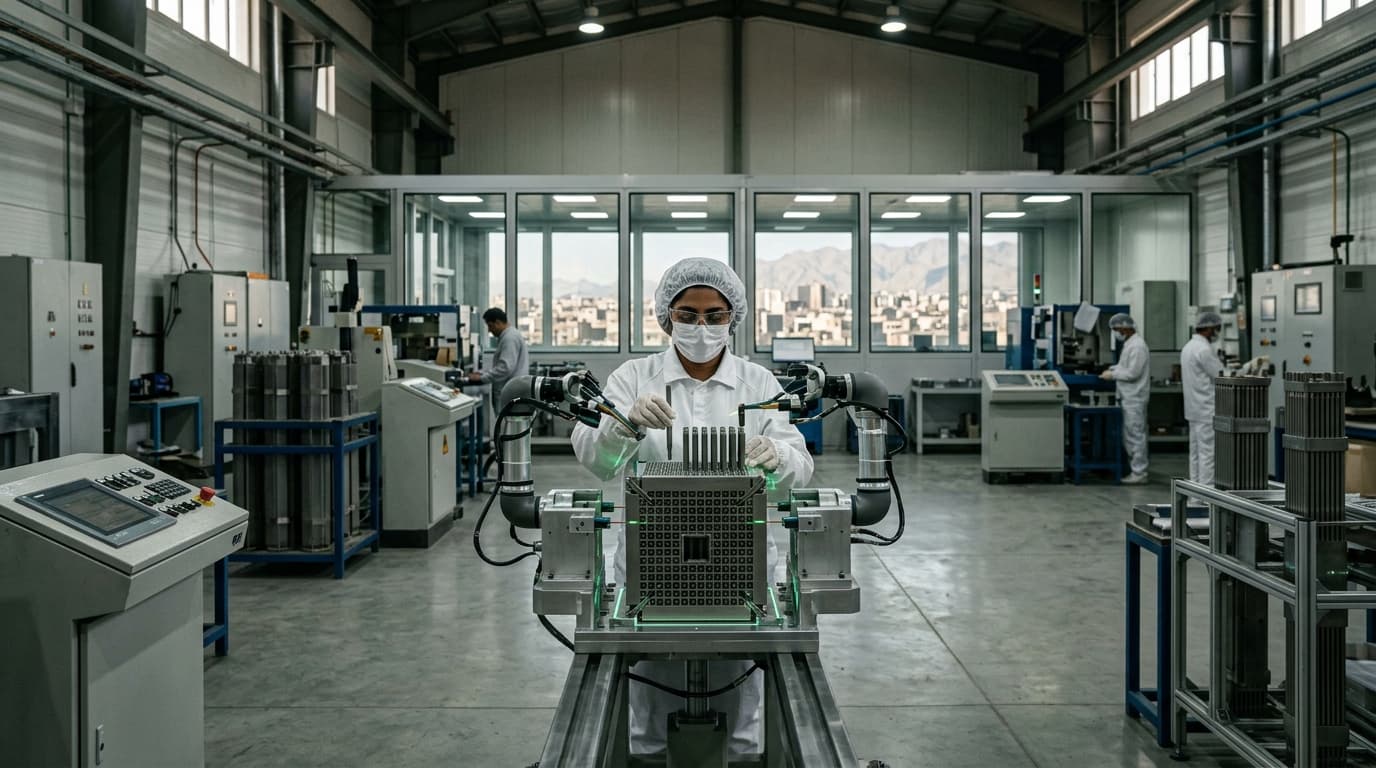
Complete Nuclear Fuel Cycle Infrastructure
Geography: Emea · Middle East · Iran
Iran has assembled a nearly complete nuclear fuel cycle, spanning uranium mining and milling, uranium conversion (the Isfahan UCF converts yellowcake to UF6 feedstock for centrifuges), uranium enrichment at multiple facilities (Natanz and Fordow), fuel fabrication, and waste management. The Bushehr nuclear power plant, while Russian-built and Russian-fueled, provides operational experience with nuclear power generation. The heavy water research reactor at Arak (modified under the JCPOA) was designed for plutonium production, though it is now partially reconfigured.
The breadth of Iran's fuel cycle is unusual among non-nuclear-weapon states. Most countries with nuclear power import enriched fuel rather than building indigenous enrichment capability. Iran's insistence on mastering the full cycle reflects both strategic hedging — maintaining the option for weapons capability — and the practical reality that sanctions have made import dependence unreliable. The conversion facility at Isfahan, built from designs obtained externally but constructed and equipped indigenously, exemplifies the self-reliance imperative.
The fuel cycle infrastructure has civilian applications that extend beyond power generation: research reactor fuel for medical isotope production, neutron sources for materials testing, and potential future applications in nuclear desalination — a particularly relevant technology for water-scarce Iran. However, the geopolitical significance overwhelms the civilian applications: Iran's fuel cycle capability is the foundation of its nuclear leverage, the object of international sanctions, and the center of ongoing diplomatic negotiations.
Research this in Signals
Signals turns a topic into a sourced research record you can inspect and rerun. Your first scan is free, and this one starts with Complete Nuclear Fuel Cycle Infrastructure already loaded, so edit it or scan as is.