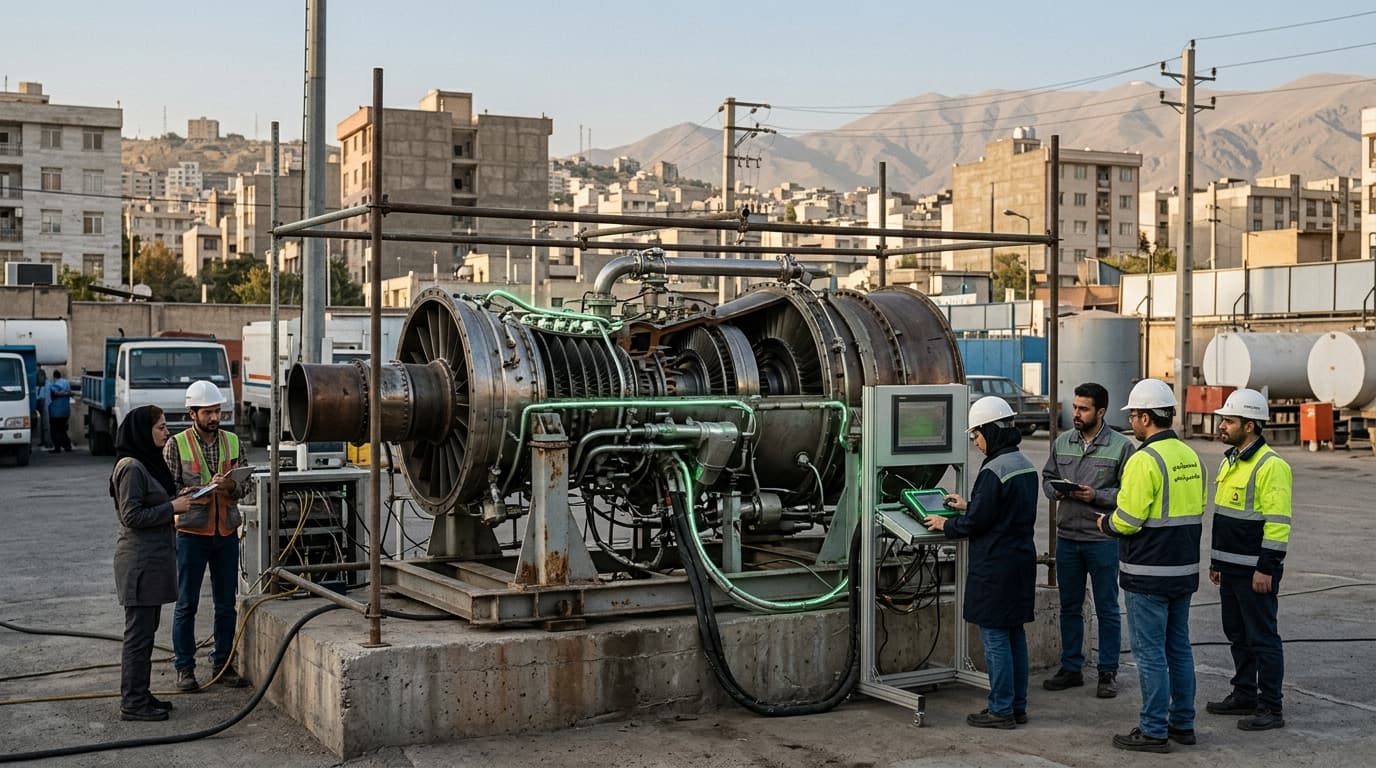
Indigenous Gas Turbine Engine Development
Geography: Emea · Middle East · Iran
Iran has invested in indigenous gas turbine technology for both power generation and military applications. In the power sector, Iran operates extensive gas-fired power generation capacity and has worked to reduce dependence on foreign turbine manufacturers (GE, Siemens) for maintenance, spare parts, and new units — all heavily restricted under sanctions. Domestic companies have developed capabilities for turbine blade production, hot-section component repair, and control system upgrades. In the defense sector, small turbojet and turbofan engines power the Shahed-series drones and other UAVs.
Gas turbine engines represent one of the most technologically demanding areas of mechanical engineering, requiring advanced metallurgy (single-crystal superalloy blades), precision machining, thermal coatings, and sophisticated control systems. Iran's indigenous turbine capabilities remain significantly below global state-of-art — particularly for large utility-scale turbines — but the ability to maintain, repair, and selectively produce components domestically prevents sanctions from grounding the country's gas-fired power fleet.
The drone engine application is more advanced in terms of full indigenous production. Small turbojet engines like those powering Shahed-136 variants are simpler than utility turbines but still require precision manufacturing capability. Mass production of these engines demonstrates an industrial base that, while not cutting-edge, is sufficient for serial production of military-relevant propulsion systems. The gap between drone-scale and utility-scale turbine capability remains wide, but the foundation exists for continued development.
Research this in Signals
Signals turns a topic into a sourced research record you can inspect and rerun. Your first scan is free, and this one starts with Indigenous Gas Turbine Engine Development already loaded, so edit it or scan as is.