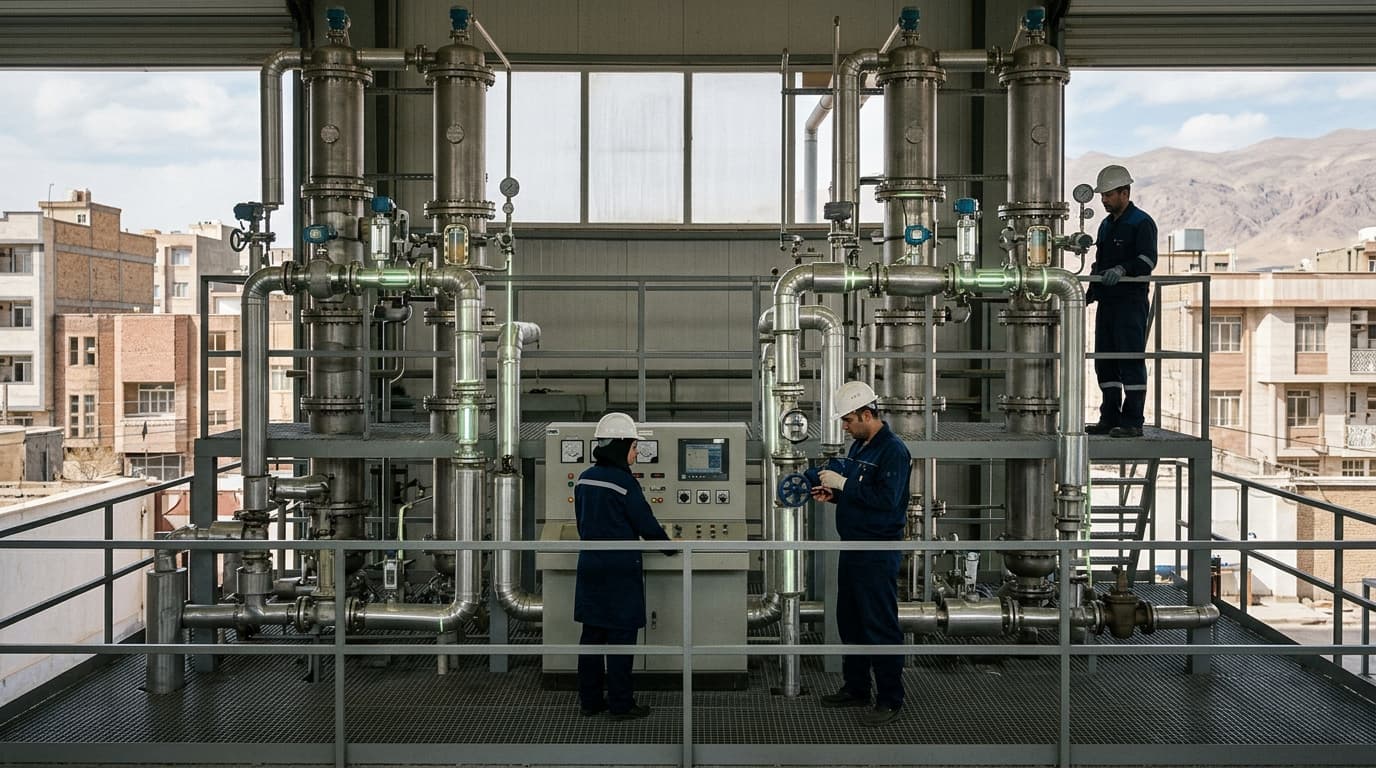
Heavy Water Production Technology
Geography: Emea · Middle East · Iran
Iran operates a heavy water (deuterium oxide, D2O) production facility at Arak with an annual capacity of approximately 16 tons. Heavy water is used as a neutron moderator in certain reactor designs and in scientific research applications. Notably, Iran has exported surplus heavy water to international buyers, including a widely reported sale to the United States — an ironic outcome of the JCPOA agreement, which capped Iran's heavy water stocks and created a commercial surplus.
Heavy water production requires industrial-scale isotope separation, typically achieved through the Girdler sulfide process or water distillation. The technology is not in itself weapons-relevant, but heavy water reactors can be used to produce weapons-grade plutonium from natural uranium fuel — hence the international sensitivity around the Arak facility. Under the JCPOA, the Arak reactor core was redesigned to significantly reduce plutonium output, though Iran has indicated willingness to reverse modifications.
The broader significance is industrial: heavy water production demonstrates Iran's chemical engineering and isotope separation capabilities, and the fact that Iran produces surplus for export reflects a pattern seen elsewhere in its technology portfolio — sanctions-driven import substitution creating capacity that eventually exceeds domestic demand. The technology also supports Iran's radiopharmaceutical and research reactor programs, contributing to the integrated nuclear technology ecosystem described elsewhere in this radar.
Research this in Signals
Signals turns a topic into a sourced research record you can inspect and rerun. Your first scan is free, and this one starts with Heavy Water Production Technology already loaded, so edit it or scan as is.