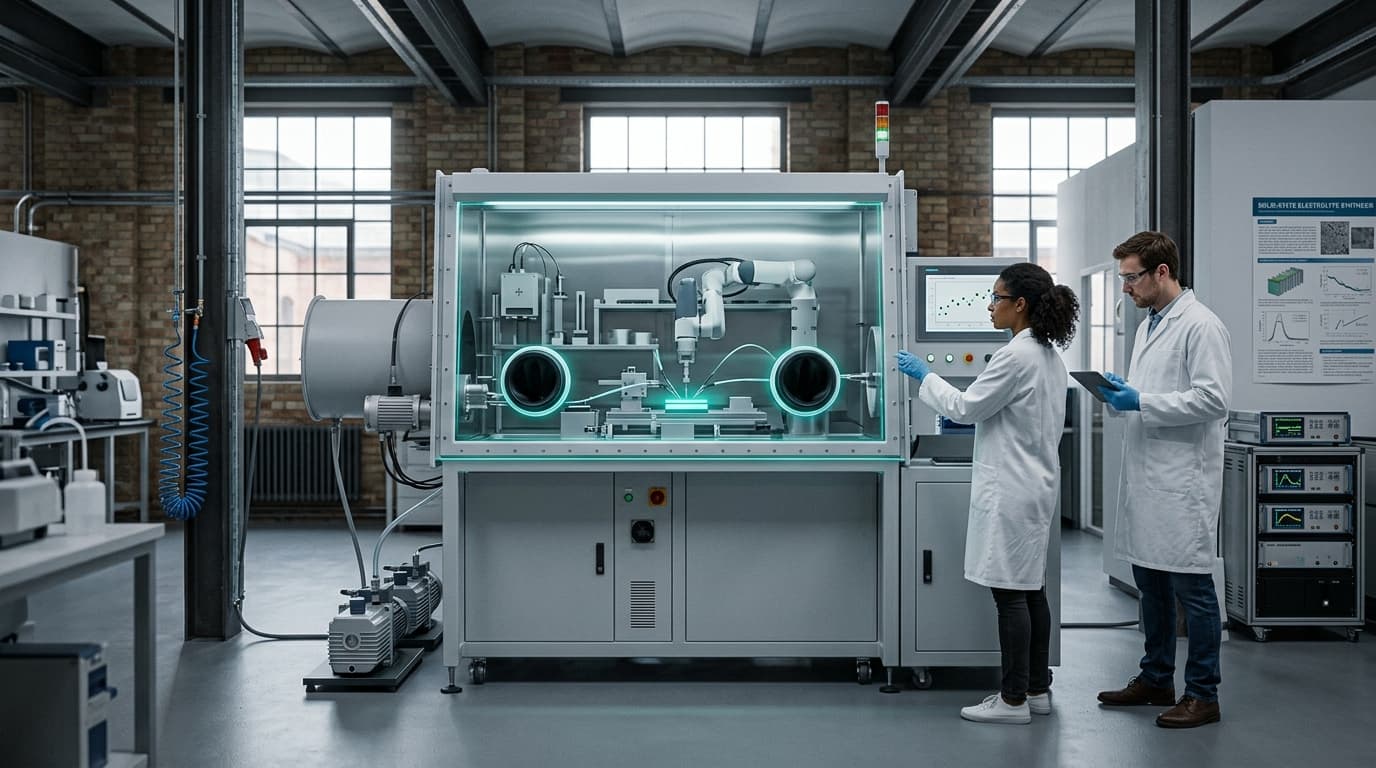
Solid-State Battery Development
Geography: Emea · Europe · Europe
European research groups and companies are developing solid-state batteries that replace the liquid electrolyte in conventional lithium-ion cells with a solid material. The benefits are transformative: roughly double the energy density (enabling 1000+ km range for EVs), no flammability risk (eliminating the primary safety concern of lithium-ion), and faster charging capability.
The automotive imperative drives European solid-state development: Volkswagen (through QuantumScape partnership), BMW, and Mercedes-Benz have committed billions to solid-state battery development. The European Battery Alliance coordinates public and private investment toward pilot production lines expected in the late 2020s.
The race is fierce — Toyota (Japan) and Samsung SDI (South Korea) are also close to commercialization. Europe's approach emphasizes integration with its existing automotive manufacturing ecosystem: solid-state cells designed for European car platforms, manufactured in European gigafactories, using materials sourced from European supply chains. If successful, solid-state batteries would eliminate Europe's disadvantage versus Chinese lithium-ion cell manufacturers by leapfrogging to a fundamentally superior technology.
Research this in Signals
Signals turns a topic into a sourced research record you can inspect and rerun. Your first scan is free, and this one starts with Solid-State Battery Development already loaded, so edit it or scan as is.