Molten Salt Fast Microreactors
Geography: Emea · Europe · Europe
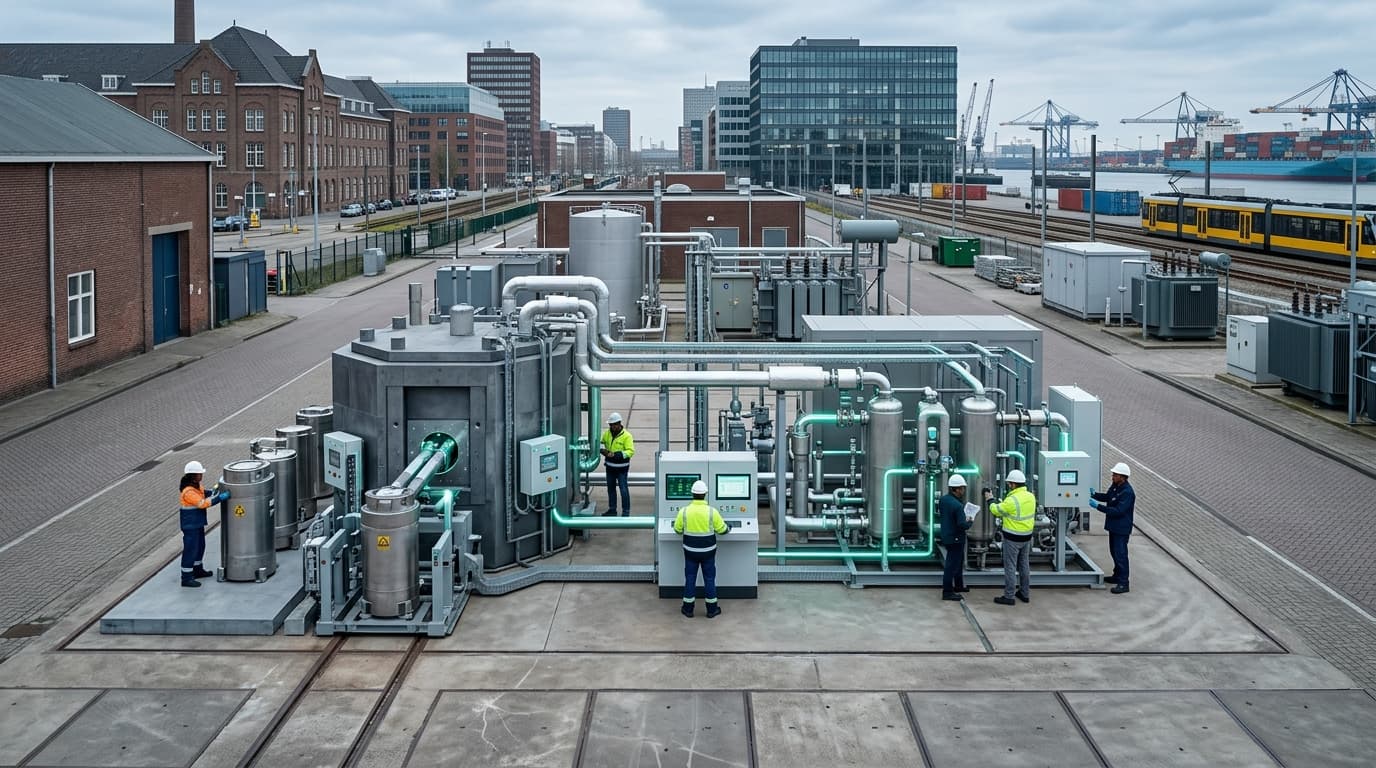
Naarea (France) is developing the XAMR, a 40 MW molten salt fast microreactor that uses spent nuclear fuel from conventional reactors as its feedstock. In September 2025, the company demonstrated a proliferation-resistant pyrochemical method for producing its sodium chloride-plutonium trichloride fuel salt — a critical milestone proving the waste-to-energy concept works at a chemical level. The reactor produces both 40 MW of electricity and 80 MW of heat.
The XAMR represents a different philosophy from other European SMR designs. While Nuward (EDF) miniaturizes conventional pressurized water reactors and Newcleo pursues lead-cooled fast reactors, Naarea combines Generation IV molten salt and fast neutron technologies into a compact, transportable unit. The molten salt approach eliminates the risk of meltdown — the fuel is already liquid — and the fast neutron spectrum can transmute long-lived radioactive waste into shorter-lived isotopes, reducing the nuclear waste problem rather than adding to it.
Naarea partnered with Phoenix Manufacture for mass production using 3D printing and precision engineering techniques — applying France's aerospace manufacturing heritage to nuclear reactor components. The compact XAMR design is intended to be factory-built and transported to sites, serving industrial facilities, military bases, or remote communities that need reliable baseload power without connection to major grids. Deployment is targeted for the early 2030s.
Research this in Signals
Signals turns a topic into a sourced research record you can inspect and rerun. Your first scan is free, and this one starts with Molten Salt Fast Microreactors already loaded, so edit it or scan as is.