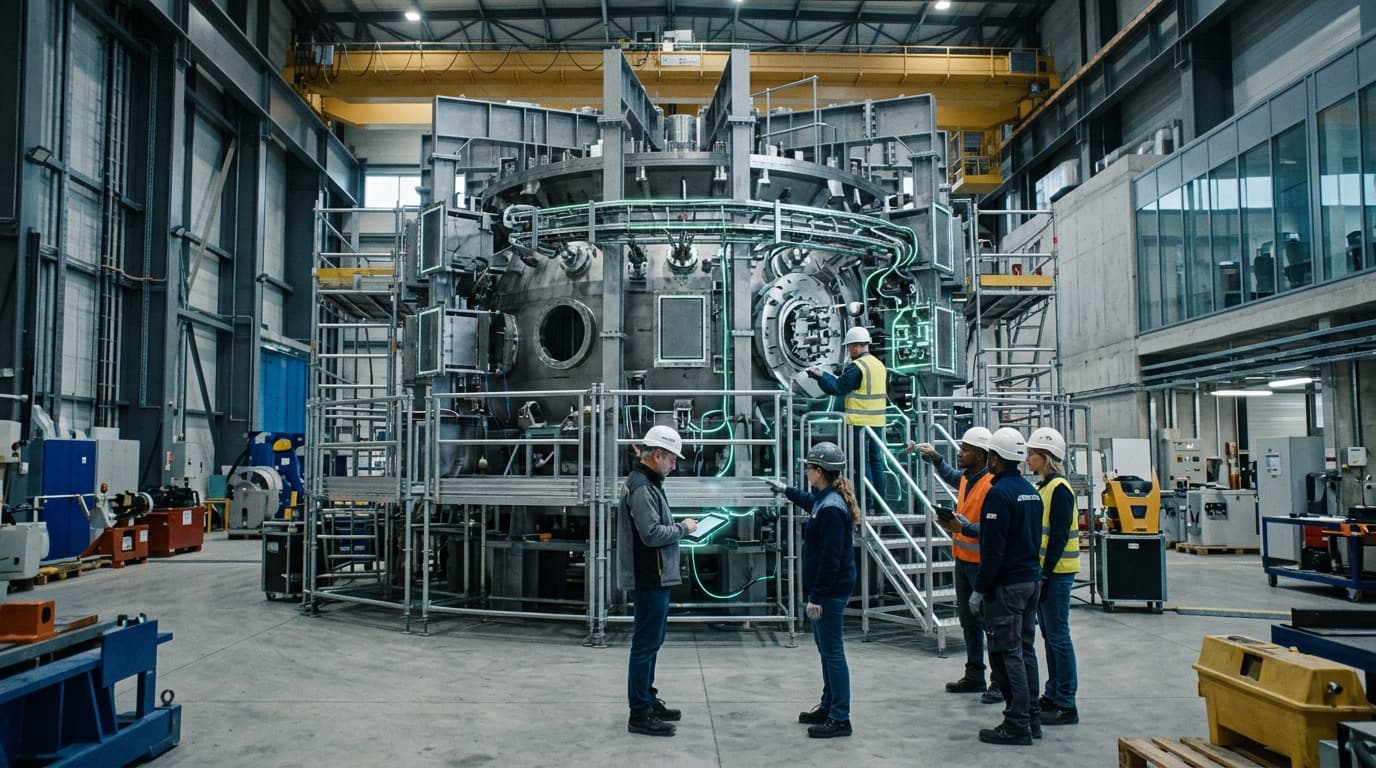
ITER Tokamak Fusion Reactor
Geography: Emea · Europe · Europe
ITER (International Thermonuclear Experimental Reactor) is being built in Cadarache, France, by a consortium of the EU, US, China, Japan, Russia, South Korea, and India. It is the world's largest tokamak fusion reactor, designed to demonstrate that fusion can produce net energy — generating 500 MW of thermal power from 50 MW of heating input.
The project has experienced significant delays and cost overruns (current estimates exceed €20B), but a 2026 progress report confirmed continued advancement toward first plasma. The ITER Council endorsed the revised timeline, and machine assembly is ongoing. The feasibility of the next step — the DEMO demonstration reactor — depends on ITER's results.
Regardless of timeline criticisms, ITER represents the most advanced fusion engineering project ever attempted. The technologies developed for ITER — superconducting magnets, plasma heating systems, tritium handling, materials science — are being commercialized by private fusion startups worldwide. Europe hosts ITER and maintains the deepest institutional knowledge of tokamak engineering.
Research this in Signals
Signals turns a topic into a sourced research record you can inspect and rerun. Your first scan is free, and this one starts with ITER Tokamak Fusion Reactor already loaded, so edit it or scan as is.