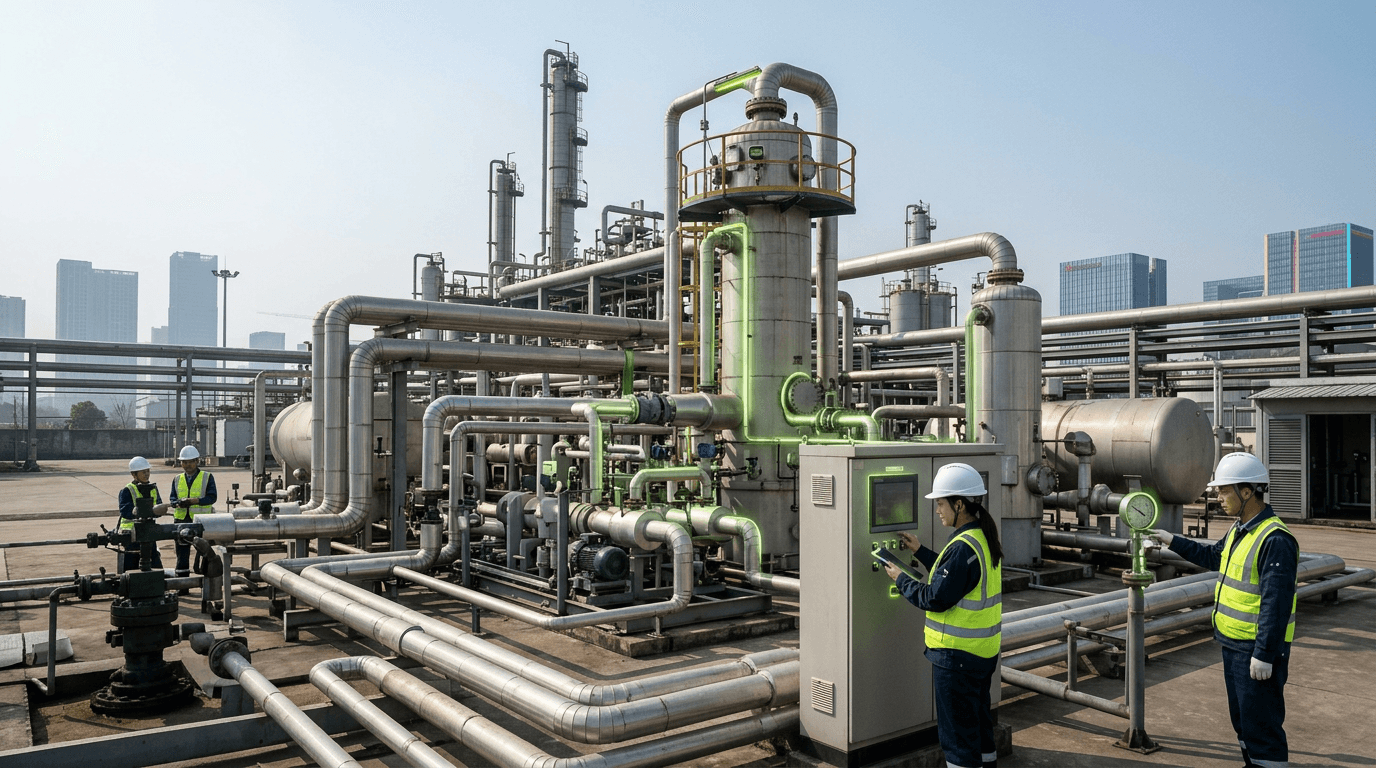
Industrial Carbon Capture, Utilization, and Storage (CCUS)
Geography: Asia Pacific · East Asia · China
China's CCUS deployments scaled dramatically in 2025. CNPC's Xinjiang Oilfield crossed the one-million-tonne cumulative CO2 injection milestone, using captured carbon for enhanced oil recovery (EOR) while permanently sequestering it underground. Separately, the world's largest coal-fired power plant carbon capture facility came online in September 2025, demonstrating industrial-scale emissions reduction from China's most carbon-intensive energy source.
The technology captures CO2 from industrial exhaust (power plants, steel mills, cement factories), compresses it, and either injects it underground for permanent storage or uses it for EOR, chemical feedstocks, or building materials. Xinjiang's oilfields alone have an estimated 2 billion tonnes of CO2 storage capacity in depleted reservoirs and saline aquifers.
CCUS is essential to China's 2060 carbon neutrality pledge because coal still generates roughly 60% of China's electricity. Even with aggressive renewable deployment, coal plants will operate for decades. CCUS is the only technology that can reduce emissions from existing coal infrastructure without shutting it down. China's ability to develop and deploy CCUS at scale — leveraging its massive coal fleet as both the problem and the testbed — could determine whether global climate targets are achievable.
Research this in Signals
Signals turns a topic into a sourced research record you can inspect and rerun. Your first scan is free, and this one starts with Industrial Carbon Capture, Utilization, and Storage (CCUS) already loaded, so edit it or scan as is.