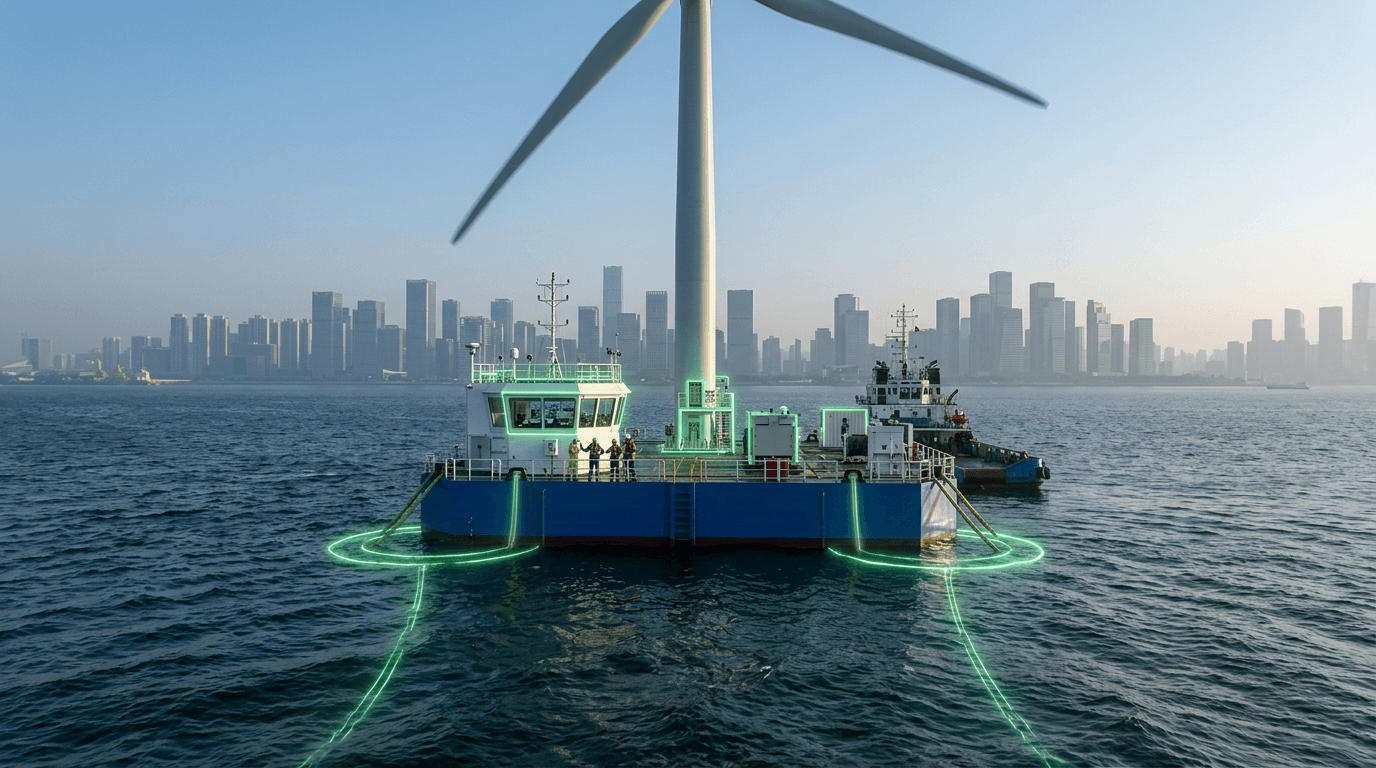
Floating Offshore Wind Turbines
Geography: Asia Pacific · East Asia · China
China rolled out the world's largest single-unit floating offshore wind turbine in October 2025 — a 16MW direct-drive unit with the world's largest rotor diameter, deployed in waters over 50 meters deep off Guangxi province. Mingyang Smart Energy followed with plans for a 50MW twin-head floating platform (Ocean-X concept), which would be the largest wind turbine ever designed.
Floating offshore wind unlocks a vast resource: most of the world's best offshore wind sites are in waters deeper than 60 meters, where traditional fixed-bottom turbines cannot be installed. Floating platforms, moored to the seabed with cables, can access these deep-water sites. China's South China Sea, with strong sustained winds and depths exceeding 100 meters, is a prime target. China Huaneng Group and Mingyang are leading the push.
The technology addresses a specific gap in China's renewable energy portfolio: onshore wind and solar face land-use constraints, while fixed-bottom offshore wind is limited to shallow coastal waters. Floating wind could add hundreds of gigawatts of capacity in the South China Sea, Taiwan Strait, and East China Sea — areas with dual energy and geopolitical significance. China's manufacturing cost advantage in turbines, platforms, and installation vessels gives it a structural edge as the global floating wind market scales.
Research this in Signals
Signals turns a topic into a sourced research record you can inspect and rerun. Your first scan is free, and this one starts with Floating Offshore Wind Turbines already loaded, so edit it or scan as is.