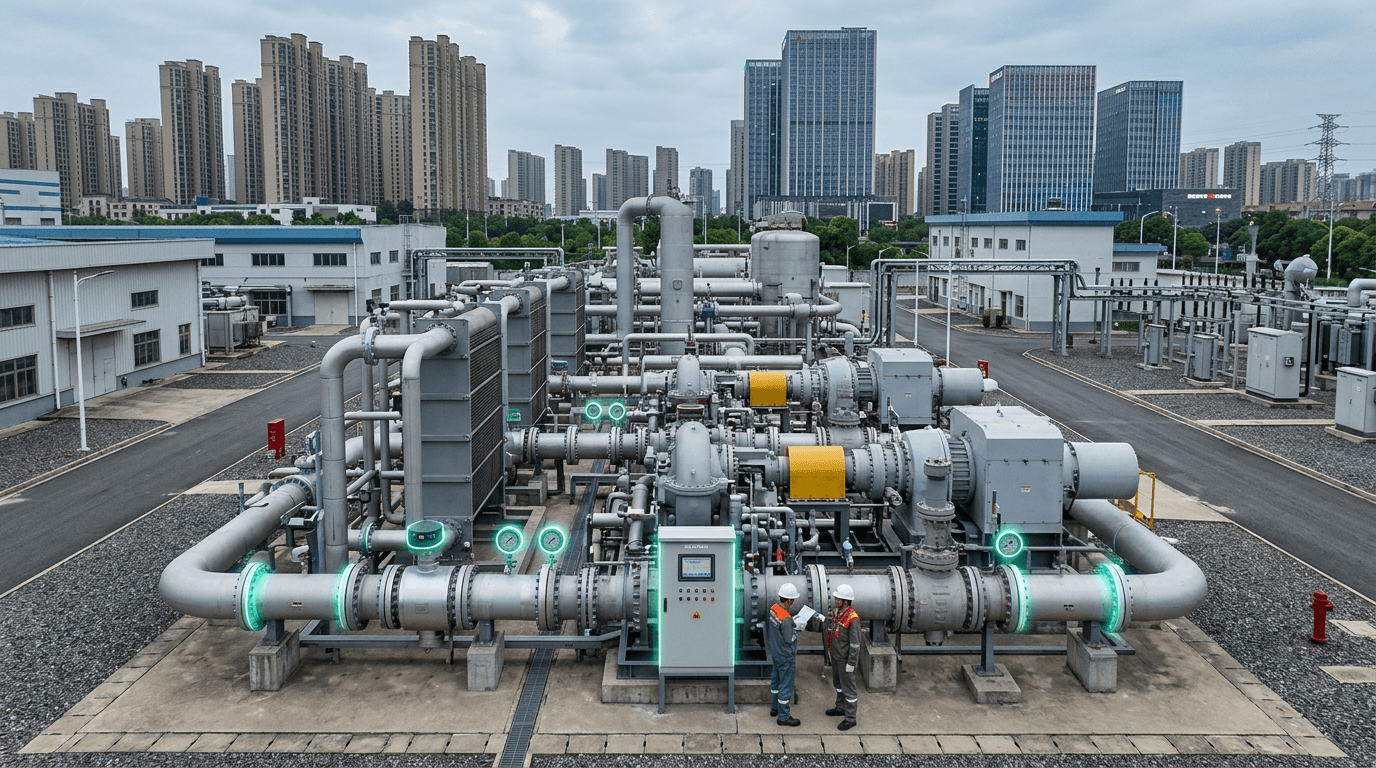
Compressed Air Energy Storage (CAES)
Geography: Asia Pacific · East Asia · China
China's compressed air energy storage program has leapfrogged the rest of the world. In January 2026, the Huai'an salt cavern CAES plant began operations with 600MW capacity and 2.4 GWh of storage — enough to power 600,000 households for hours. The system compresses air into underground salt caverns during periods of excess renewable generation and releases it through turbines when demand peaks, achieving roughly 70% round-trip efficiency.
The technology solves a critical problem: solar and wind generate electricity when the sun shines and wind blows, not when people need it. Lithium batteries work for short-duration storage (2-4 hours) but are expensive for long-duration needs (8-12+ hours). CAES stores energy for 6-10 hours at a fraction of lithium's cost per MWh, using salt deposits that China has in abundance. A 700MW / 4.2GWh facility was approved in November 2025.
The Chinese Academy of Sciences drove the key innovation: adiabatic CAES that captures and reuses compression heat, eliminating the need to burn natural gas during expansion (which older CAES designs required). This makes the technology fully zero-emission. No other country has deployed non-combustion CAES at anything close to this scale — the previous largest was a 321MW gas-burning plant in Alabama built in 1991.
Research this in Signals
Signals turns a topic into a sourced research record you can inspect and rerun. Your first scan is free, and this one starts with Compressed Air Energy Storage (CAES) already loaded, so edit it or scan as is.