All-Solid-State Batteries
Geography: Asia Pacific · East Asia · China
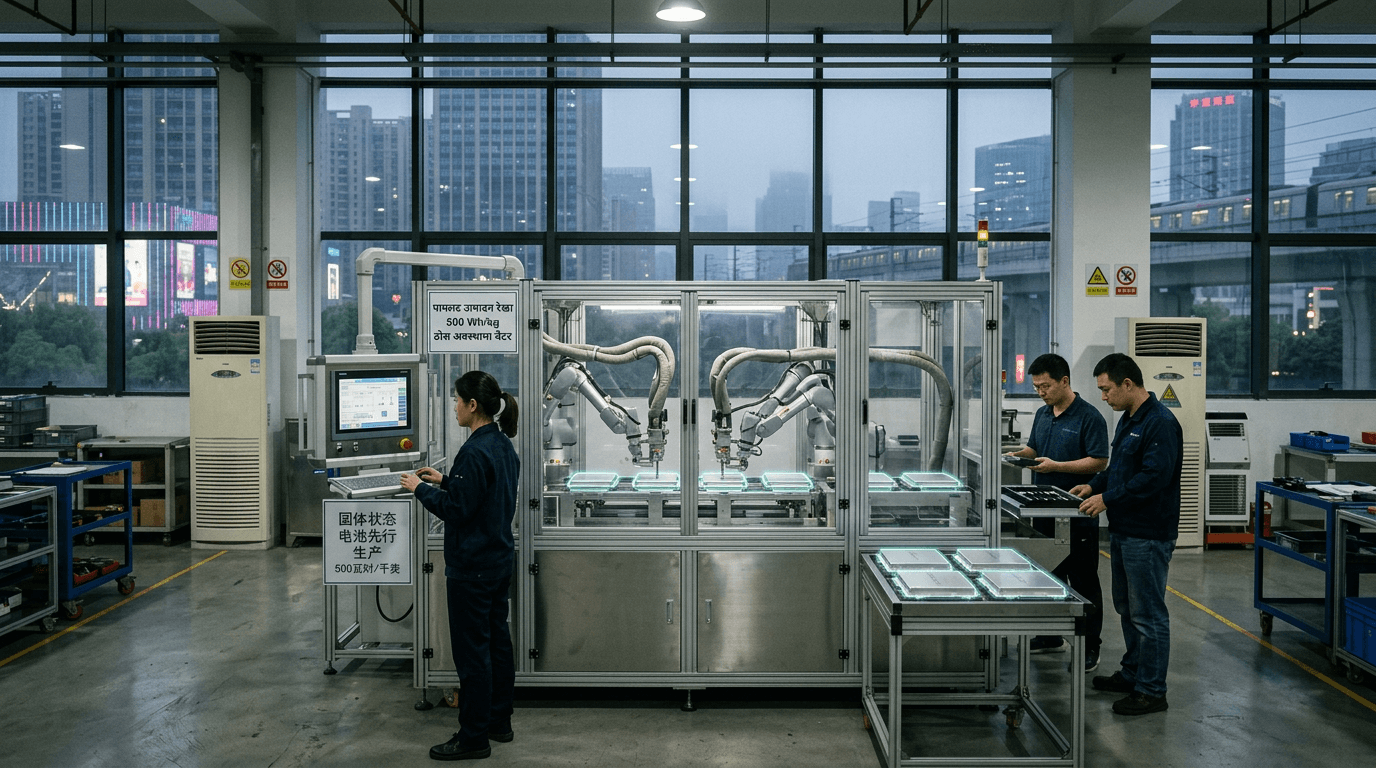
CATL has begun pilot production of all-solid-state batteries achieving 500 Wh/kg energy density — nearly double the ~270 Wh/kg of today's best lithium-ion cells. The technology replaces the liquid electrolyte with a solid material (sulfide, oxide, or polymer), eliminating the fire risk that plagues lithium-ion batteries while dramatically increasing energy density.
China's solid-state push is a national campaign. CATL invested over 10 billion yuan in a semi-solid demonstration line at its Hefei base in 2025. NIO, with 2,300+ battery swap stations, is positioned to rapidly deploy solid-state packs. Multiple other Chinese firms — including SVOLT, Ganfeng Lithium, and QingTao Energy — have disclosed solid-state programs. The government's official roadmap targets 400 Wh/kg hybrid cells by 2030 and 500 Wh/kg true solid-state by 2035, but CATL appears to be running ahead of schedule.
The stakes are enormous: solid-state batteries would give EVs 600+ mile ranges, charge in under 15 minutes, and last 10+ years without degradation. Whoever commercializes them first captures the next battery paradigm. Japan's Toyota has claimed solid-state leadership for years but has not reached pilot production. CATL's March 2026 patent filing and pilot line suggest China may get there first.
Research this in Signals
Signals turns a topic into a sourced research record you can inspect and rerun. Your first scan is free, and this one starts with All-Solid-State Batteries already loaded, so edit it or scan as is.