Robotics Kits for Coding
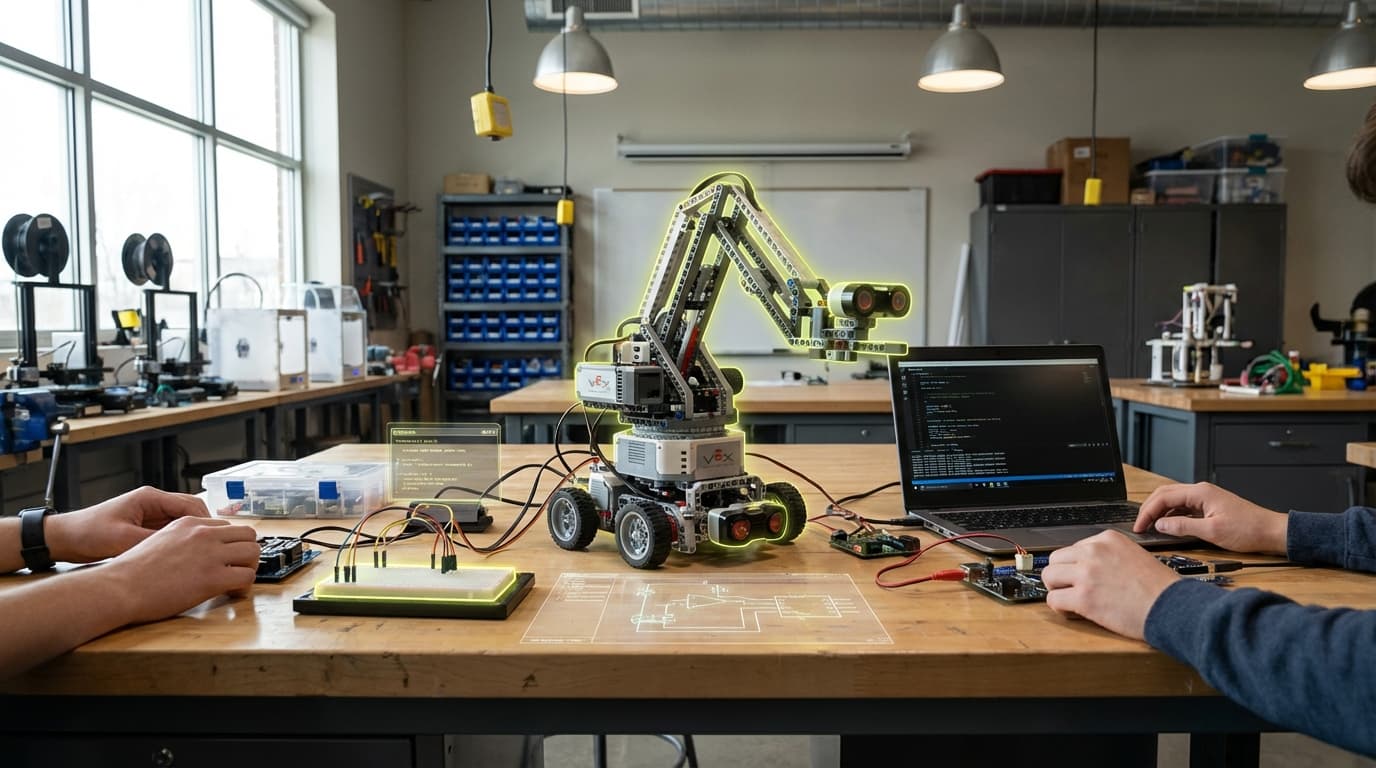
Robotics kits for coding education combine modular hardware components—programmable microcontrollers, sensors (light, sound, touch, distance), motors, actuators, and structural building elements—with age-appropriate programming interfaces ranging from visual block-based coding (like Scratch) to text-based languages (like Python), enabling learners to build and program physical robots that respond to their environment. These hands-on ecosystems, exemplified by platforms like LEGO Mindstorms, VEX Robotics, and Arduino-based kits, allow students to iterate on physical designs while learning computational thinking, problem-solving, and engineering principles. The tangible nature of robotics makes abstract programming concepts concrete, as students can immediately see the results of their code in physical robot behavior.
This innovation addresses the challenge of making programming and computational thinking engaging and accessible, where traditional computer-based coding can feel abstract and disconnected from real-world applications. By providing physical, interactive platforms for learning to code, robotics kits create immediate feedback loops and make programming concepts tangible. Educational robotics companies and platforms have developed comprehensive curricula, competitions, and community resources, with robotics programs becoming popular in schools, after-school programs, and maker spaces worldwide.
The technology is particularly significant for STEM education, where robotics combines multiple disciplines (engineering, programming, mathematics, physics) in engaging, project-based learning experiences. As robotics kits become more affordable and user-friendly, they could become standard tools for teaching computational thinking. However, ensuring curriculum alignment, providing teacher training, managing costs, and maintaining equipment remain challenges. The technology represents a proven and popular approach to hands-on STEM education, with clear benefits for engaging students in computational thinking and engineering.
Related Organizations
The educational division of the LEGO Group, producing SPIKE Prime and Mindstorms kits.
An open-source hardware and software company that designs single-board microcontrollers and microcontroller kits.

A global STEAM education solution provider known for the mBot series and metal construction platforms.
A nonprofit organization that oversees the BBC micro:bit, a pocket-sized computer designed to teach coding.

A UK charity that works to put the power of computing and digital making into the hands of people all over the world.

A robotics company known for programmable spherical robots like Bolt and RVR+ designed for education.

A robotics company known for small robots that can be coded via screens or by drawing colored lines on paper.
A global leader in AI and humanoid robotics, producing the JIMU Robot kits for education.

Creators of Dash and Dot robots, designed specifically for elementary school coding education.

A spin-off from Carnegie Mellon offering the Finch Robot and Hummingbird Robotics Kit.
Supporting Evidence
Research this in Signals
Signals turns a topic into a sourced research record you can inspect and rerun. Your first scan is free, and this one starts with Robotics Kits for Coding already loaded, so edit it or scan as is.