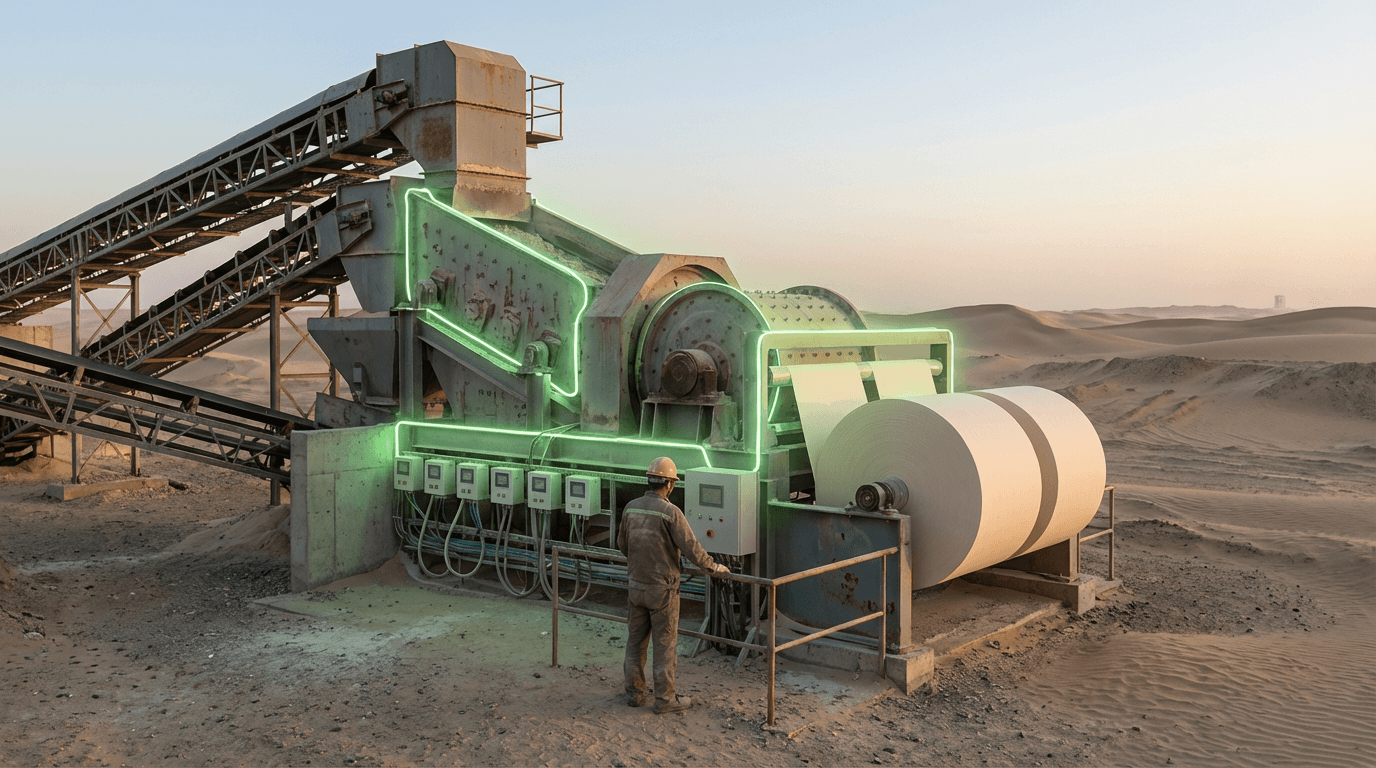
Stone Paper Innovation from Desert Sand in China
Stone paper represents a remarkable shift toward environmentally friendly production methods, utilizing abundant desert sand to create a durable and waterproof alternative to conventional paper. This innovative material is composed of 80% ground minerals and 20% high-density polyethylene (HDPE) or agricultural waste, eliminating the need for trees, water, and harmful chemicals in its production process.
Developed primarily in Xinjiang, China, this stone paper not only addresses the issues of deforestation and water scarcity but also provides economic opportunities in arid regions where it is produced. By transforming barren desert landscapes into sources of valuable resources, the technology exemplifies a sustainable approach to material manufacturing that directly responds to pressing environmental challenges.
The production process involves grinding calcium carbonate-rich sand into a fine powder, mixing it with binders, and then forming it into sheets under heat and pressure. This method, which has been refined over the years, results in a recyclable material with superior physical properties such as tear resistance, waterproofing, and a smooth finish suitable for various applications including notebooks, packaging, and art supplies.
Despite its advantages, stone paper faces challenges such as higher initial costs and the need for specialized recycling infrastructure. As research continues to improve its formulations and reduce dependencies on synthetic materials, the potential for broader adoption of stone paper grows, promising a transformative impact in the paper industry and beyond.
Overall, China's stone paper innovation stands as a testament to how local resources can be leveraged for sustainable practices, encouraging a circular economy and promoting ecological preservation while meeting the increasing global demand for sustainable materials.
Related Organizations
China · Company
A technology group specializing in 'sand industry' innovations, utilizing desert sand for various materials including permeable bricks and filtration.
Taiwan · Company
The original inventor and major patent holder of stone paper technology (calcium carbonate + HDPE).
Australia · Company
A B Corp certified brand selling stone paper notebooks and stationery globally, driving consumer demand for the material.
New Zealand · Company
Distributor and product developer for stone paper materials in the Oceania region.
Supporting Evidence
Research this in Signals
Signals turns a topic into a sourced research record you can inspect and rerun. Your first scan is free, and this one starts with Stone Paper Innovation from Desert Sand in China already loaded, so edit it or scan as is.