Planetary Protection & Contamination
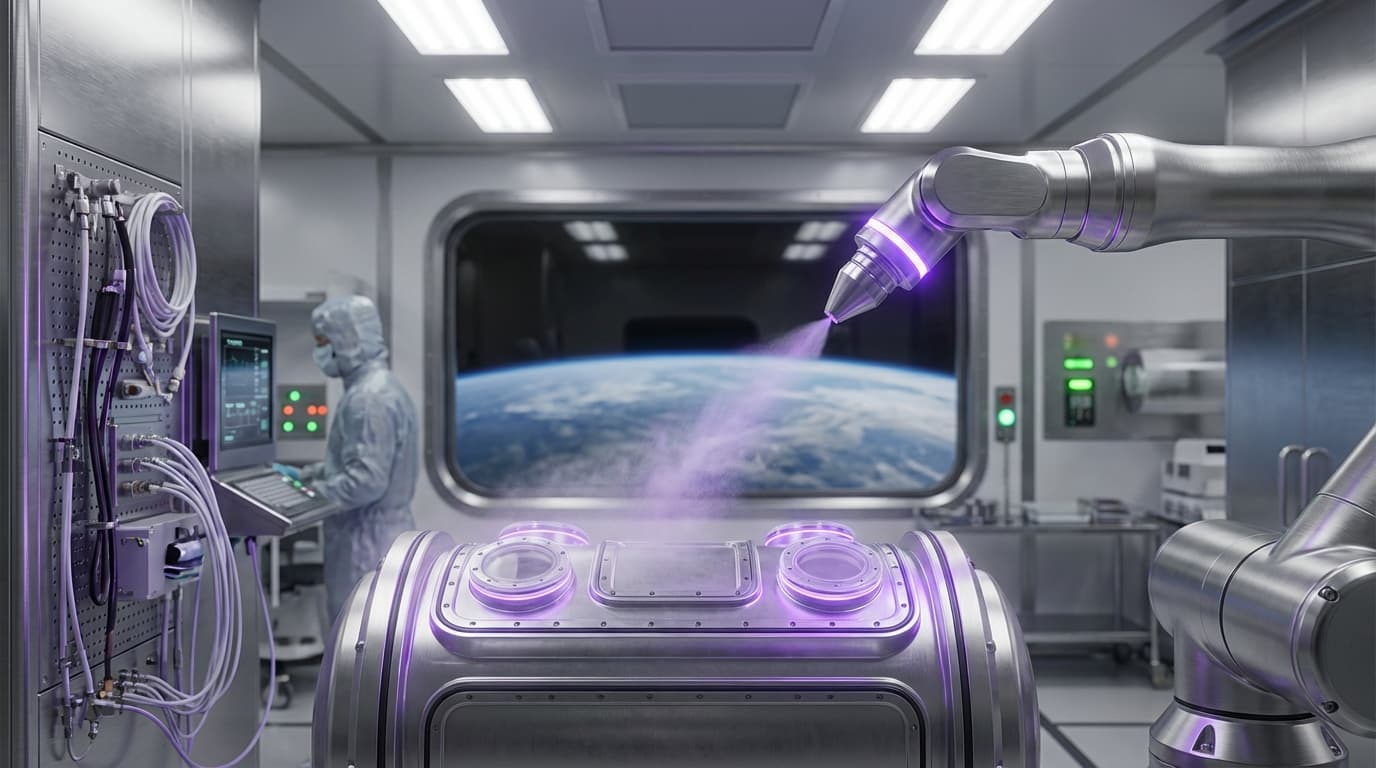
Planetary protection encompasses strict protocols and technologies designed to prevent biological or chemical contamination of celestial bodies during exploration and resource utilization activities. These measures ensure that Earth organisms don't contaminate other worlds (forward contamination), which could compromise scientific research and potentially harm potential native life, and that samples returned to Earth don't pose risks (backward contamination). The protocols include spacecraft sterilization, cleanroom assembly, and careful handling of samples.
This innovation addresses the critical responsibility to preserve the scientific integrity of other worlds and protect potential native life forms. As space exploration expands and includes resource utilization activities that could introduce Earth organisms, maintaining planetary protection becomes increasingly challenging but no less important. The protocols balance the need for exploration and utilization with the ethical obligation to preserve other worlds for scientific study and potential native life.
The technology is essential for responsible space exploration, ensuring that we don't irreversibly contaminate other worlds before we can study them properly. As missions become more frequent and include resource utilization activities, maintaining effective planetary protection becomes more complex. However, the protocols must evolve to accommodate new mission types while maintaining their core purpose. The technology represents an important ethical framework for space exploration, but faces challenges in balancing protection with exploration goals and in adapting to new mission concepts that may require different approaches.
Related Organizations

International scientific body that maintains the Planetary Protection Policy used as the global standard.
Developed and operates the EMIT (Earth Surface Mineral Dust Source Investigation) hyperspectral instrument on the ISS.

Leads the EAGLE-1 mission and the SAGA program to build a European quantum communication infrastructure in space.

Leading long-term research into SBSP, with plans to demonstrate power transmission from orbit by 2025.

Collective scientific national academy of the United States.

Research organization exploring the origin and nature of life in the universe.

The prime contractor for the European Robotic Arm (ERA) currently on the ISS.

Global provider of infection prevention and sterilization products.

A major European satellite manufacturer leading the ASCEND feasibility study.

Multinational biotechnology company focusing on in vitro diagnostics.
Supporting Evidence
Research this in Signals
Signals turns a topic into a sourced research record you can inspect and rerun. Your first scan is free, and this one starts with Planetary Protection & Contamination already loaded, so edit it or scan as is.