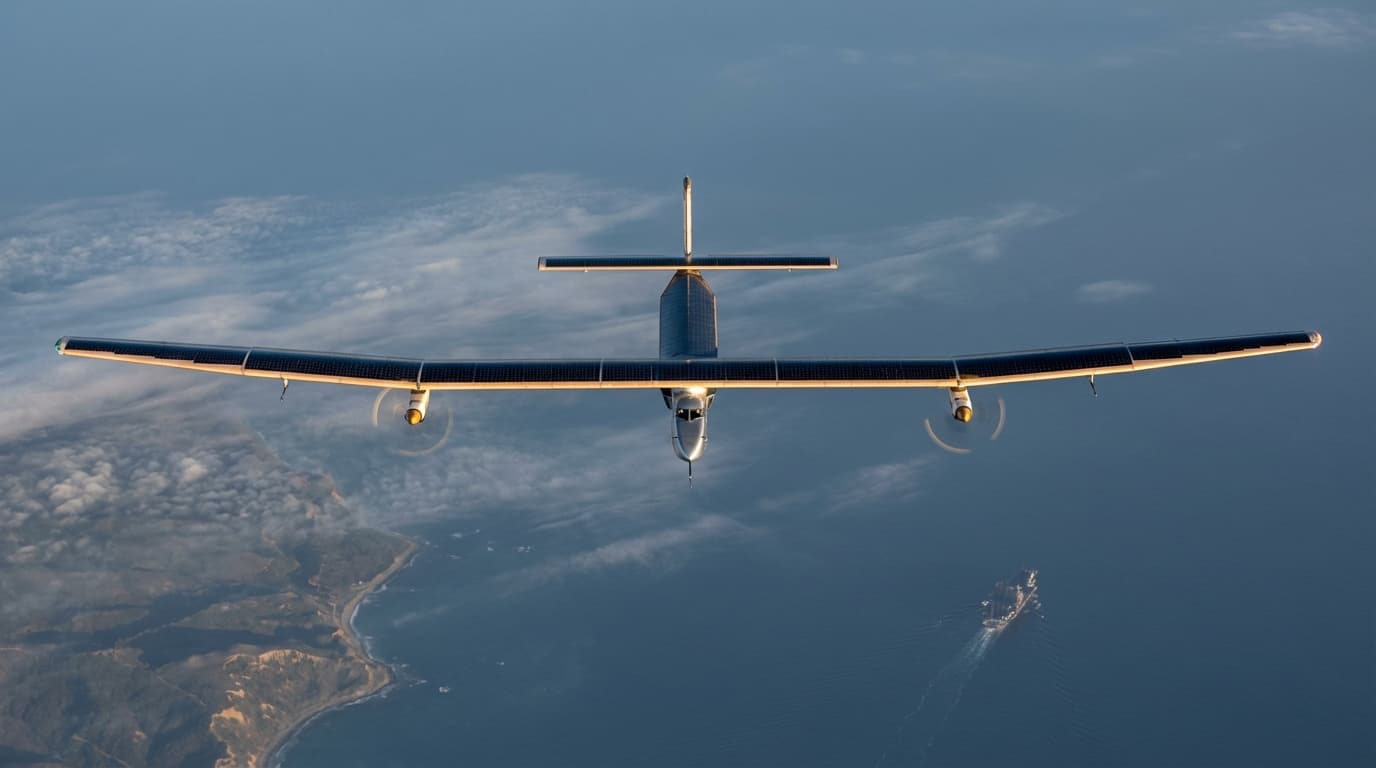
High-Altitude Pseudo-Satellites (HAPS)
High-altitude pseudo-satellites (HAPS) are solar-powered, long-endurance aircraft operating in the stratosphere (the layer of atmosphere above where commercial aircraft fly) to provide intelligence, surveillance, reconnaissance (ISR, gathering information), and communications relay (extending communication range). HAPS bridge the gap between drones (which have limited range and endurance) and satellites (which are expensive and have latency), offering persistent coverage (continuous monitoring) and localized defense bubbles (areas of protection) without the cost and latency (delay) of full orbital infrastructure (satellites), creating platforms that can stay aloft for weeks or months while providing satellite-like capabilities at lower cost and with less delay, making them ideal for regional defense and surveillance missions.
This innovation addresses the gap between short-range drones and expensive satellites, where HAPS provide a middle ground. By operating in the stratosphere, these platforms can provide persistent coverage. Aerospace companies are developing these systems.
The technology is particularly significant for regional defense, where HAPS can provide persistent coverage at lower cost than satellites. As the technology improves, HAPS could become standard for many missions. However, ensuring reliability, managing weather, and achieving long endurance remain challenges. The technology represents an important evolution in aerial platforms, but requires continued development to achieve the reliability needed for operational use. Success could provide cost-effective persistent coverage, but the technology must prove its reliability. HAPS are an active area of development with some systems already flying.
Related Organizations

The prime contractor for the European Robotic Arm (ERA) currently on the ISS.

Produces the Switchblade loitering munition and Puma UAS, key assets for autonomous tactical reconnaissance and strike.


Defense and aerospace company known for the ADAPTIV thermal camouflage system.

Material science company developing high-altitude platform stations.

Multinational company designing and building electrical systems and providing services for the aerospace, defence, transportation and security markets.

Provides high-resolution geospatial imagery from the stratosphere.


Manufactures 100% silicon nanowire anode batteries with extremely high energy density for aviation and mobile devices.
Supporting Evidence
Research this in Signals
Signals turns a topic into a sourced research record you can inspect and rerun. Your first scan is free, and this one starts with High-Altitude Pseudo-Satellites (HAPS) already loaded, so edit it or scan as is.