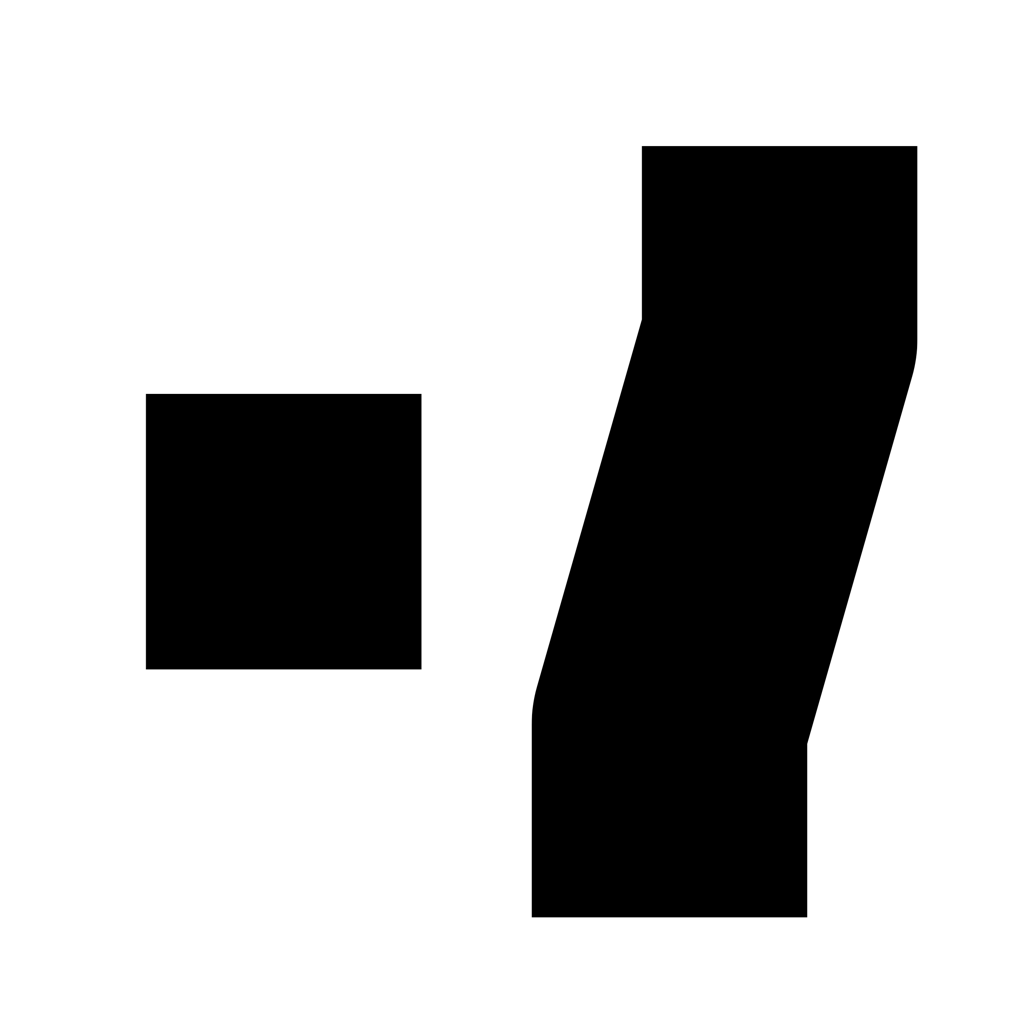
Lockup
The symbol and wordmark together. This is the default. Use it anywhere you have the horizontal room.
Our mark, type, colour, and language.
For partners, event organisers, journalists, and collaborators. Use these originals as they are; ask us if you need something else.
Three marks, each in a version for light surfaces and a version for dark. Use the source files rather than a screenshot or a logo pulled from a slide deck. SVG scales to any size and stays sharp in print, so prefer it unless the tool refuses it.
The symbol and wordmark together. This is the default. Use it anywhere you have the horizontal room.
The name on its own, for places the symbol would only add noise. The accent version carries the lime stroke at the right edge, which is part of the mark.
The Envisioning symbol on its own. Use it for avatars, favicons, app icons, and partner grids where every logo sits in the same square.
Keep the height of the symbol's center bar clear on every side of the mark. Nothing sits inside that margin: no text, no rule, no other logo, no edge of the page.

Dashed line marks the minimum clear space
Every one of these has reached a real slide at some point. The mark is a fixed asset, so the only decisions you need to make are which variant and how big.
Use a shipped variant. There is one for every surface.
Scale both dimensions together, always.
The mark sits level. There is no angled variant.
No shadows, glows, bevels, or outlines on the mark.
Lime is a highlight. The mark goes on white, off-white, navy, or black.
Dark ink on a dark surface. Switch to the reverse variant instead.
Respect the clear space, and never set a tagline inside the lockup.
When you use the accent wordmark, the lime stroke at the right edge stays. Use the plain wordmark if you want it gone.
One saturated lime over a navy and near-white base. The palette is deliberately narrow, and there are no gradients in it. Click any value to copy it.
The only chromatic color in the system. One highlight per headline, one accent button per section.
accentHighlight marker, CTA fills on dark, the brand's strongest note. Always with navy text.
accentDownLight-theme primary, link accents, and small affordances where full lime reads loud.
An ink family rather than true black. It keeps the depth of printed ink without reading as an OLED void.
blackBody text, and the text color on every lime surface.
blackDownDark-mode page background.
blackDownUpRaised cards and alternating blocks on dark.
blackDownDownSunken wells and the footer surface.
blackUpMuted text on dark surfaces.
Cool neutral grays. These carry most of the page.
whiteDownThe alternating section background.
graySection dividers.
grayDownSubtle dividers and hairlines.
Reserved for real state. Never decorative.
ringDeliberately off-brand so keyboard focus is unmistakable.
destructiveErrors and destructive actions.
successConfirmed state.
Inter, variable, at every weight we need. Body copy sits at 18px. The move that makes the page look like us is that titles are set light at weight 300 while prose headings go up to 500, so the largest type on the page is also the quietest.
The wordmark uses our own face, Envisioning Octa. It has its own page, with the files and the rules for when to reach for it.
A lime background behind one word of a headline, with navy text. It is the most recognizable thing we do typographically, and it stops working the moment there are two of them in a sentence.
In a deck or a document, match these values rather than eyeballing them.
The verbal half of the identity matters more than the logo does, because far more people read us than look at us.
Plain, direct, specific. First person plural for the company, second person for the reader. Confident enough to name what we cannot do.
Sentence case, always. Write them as statements that could be true or false. Never a stacked noun phrase like Reusable Strategic Infrastructure.
At least one per section. A number, a name, a year, a limit. If a competitor could sign the sentence, it says nothing yet.
Em dashes, emoji, hype adjectives (revolutionize, disrupt, unlock, leverage, seamless, robust, holistic, cutting-edge), or the X, not Y inversion more than once on a page.
One name per product, spelled the same way in decks, forms, and running text.
| The thing | Write it | Not |
|---|---|---|
| The self-serve platform | Signals | Signals Workspace, the Signals platform, Signals app |
| The Signals plans | Starter, Pro, Enterprise | the Workspace, tiers |
| The analyst-led engagement | Signals Session | Research Session, Signals Sessions, Work Session |
| The custom build tier | Bespoke Projects | bespoke, Bespoke |
| The vibe coding training | Build Sessions | workshops, vibe coding sessions |
| The free first step | Signal Scan | free scan, test scan |
| The method | Multi-Model Convergence | our methodology, multi-model orchestration |
| The open guide | Coding for Non-Coders | the workshop, CFNC |
Use one of these verbatim in a press release, an event program, or a partner page. Click to copy.
Envisioning is a research institute that studies how institutions adapt to technological change.
Envisioning is a research institute that studies how institutions adapt to technological change. We map what is emerging, measure the capacity to respond to it, and build what strengthens that capacity.
Envisioning is a research institute that studies how institutions adapt to technological change. We map what is emerging, measure the capacity to respond to it, and build what strengthens that capacity. Signals, our research platform, scans a question across frontier models and checks every signal against real sources. Our services run on it: analysts who work one question with you, Build Sessions that teach a team to prototype with AI, and research tools built for one organization. We work across Europe, Latin America, and the Middle East, through direct engagements and certified partners who deliver in their own regions and languages. Most of our research is published openly at envisioning.com/research.
Partner materials should read as a collaboration between two organizations that each kept their own identity.
Equal optical height, a neutral separator, and enough space that neither mark reads as owning the other.
You can use these files to refer to Envisioning, to credit work we did together, or to link to us. You cannot use them to suggest we endorse or partner with something we have not agreed to. If you need a mark, a format, or a co-branded layout that is not on this page, write to us and we will make it rather than have you rebuild it.
Pointing an agent at this? /design.md is the whole system as one file: the tokens as data, the rules in plain language, and the typeface it is all set in.