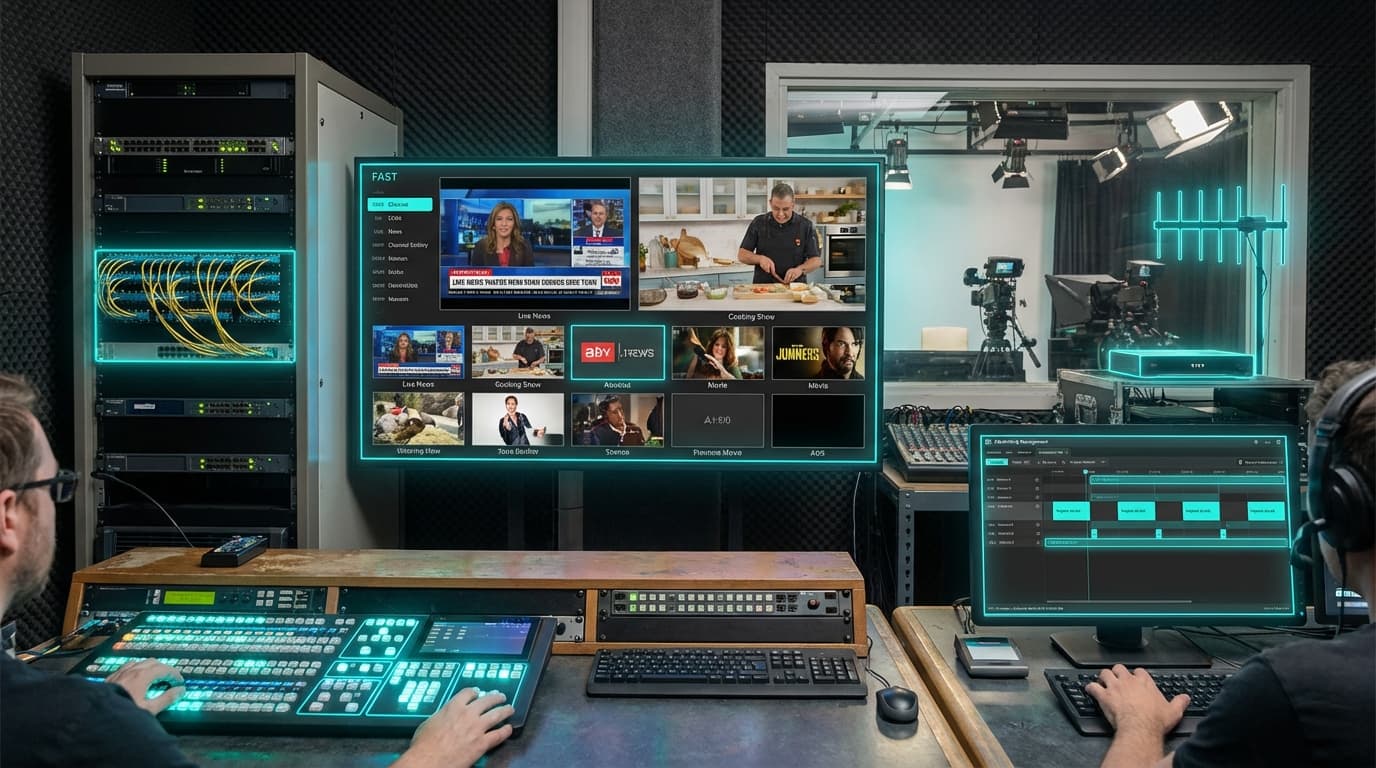
FAST (Free Ad-supported Streaming TV)
FAST networks stitch together 24/7 IP-delivered channels that feel like cable—program grids, autoplay, dayparting—but run entirely over OTT stacks with server-side ad insertion. Programmers recycle studio libraries and influencer catalogs into themed channels (true crime, K‑dramas, esports), wrap them in EPG metadata, and syndicate to Samsung TV Plus, Pluto, Rakuten, and regional smart-TV portals. Dynamic ad decisioning swaps spots per household, while shoppable overlays and QR moments bridge lean-back viewing with commerce.
Legacy broadcasters embrace FAST to keep back catalogs monetized amid cord-cutting, while digital-first studios use it to acquire incremental reach without negotiating carriage fees. Hyperlocal newsrooms resurrect linear formats cheaply, and sports leagues spin “evergreen action” channels mixing archive footage with live studio commentary. Because cost to launch is low, niche communities—from ASMR creators to indigenous language networks—experiment with running micro-channels that would never clear traditional cable lineups.
With TRL 9 maturity, differentiation now hinges on data sharing, measurement, and supply-path transparency. Agencies demand CTV fraud safeguards and unified impressions across FAST and AVOD; regulators push for discoverability rules to prevent gatekeepers from burying independent channels. Platform owners respond with audience guarantees, contextual targeting APIs, and hybrid subscription tiers. As smart TVs ship with OS-level FAST shelves and automotive OEMs add in-dash channels, free ad-supported TV is evolving from an afterthought into a core pillar of global streaming strategy.
Related Organizations
United States · Company
A pioneer in the FAST space, owned by Paramount, offering hundreds of linear channels.
United States · Company
Fox Corporation's ad-supported streaming service which has aggressively expanded into linear FAST channels.
United States · Company
Provides cloud-based broadcast and targeted advertising solutions specifically for FAST channel creation and distribution.
United States · Company
A leader in powering streaming TV, interconnecting video producers, video services, and advertisers (owned by AppLovin).
United States · Company
Cloud-based video software that manages linear channel creation and distribution for FAST.
United States · Company
Operates The Roku Channel, a top-tier aggregator of FAST channels and on-demand content.
United States · Company
A joint venture between Comcast and Charter, providing FAST channels and hardware devices.
United States · Company
A film and television studio and operator of the world's largest independent ad-supported streaming network.
United States · Company
Provides white-label FAST channel services and application development for content owners.
Supporting Evidence
Research this in Signals
Signals turns a topic into a sourced research record you can inspect and rerun. Your first scan is free, and this one starts with FAST (Free Ad-supported Streaming TV) already loaded, so edit it or scan as is.