C2PA / Content Credentials
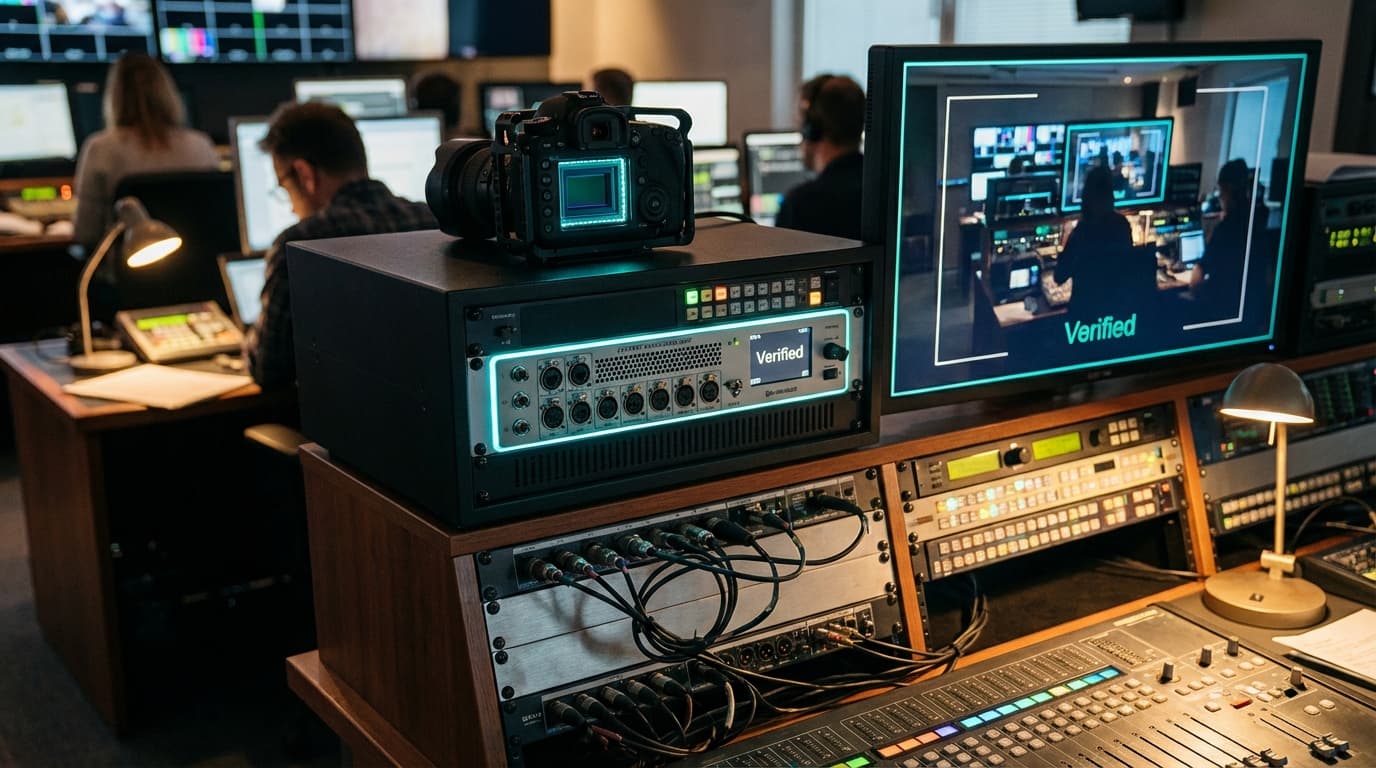
The Coalition for Content Provenance and Authenticity (C2PA) defines a manifest format, signature scheme, and trust registry so every image, video, audio file, or PDF can carry a tamper-evident log of how it was captured and edited. Camera firmware, Adobe’s Content Credentials, and newsroom CMS plug-ins automatically write manifests describing sensor data, edits, and AI involvement; downstream platforms verify the signatures and expose a badge that viewers can click to inspect lineage. The standard works alongside watermarking—C2PA tells you the declared history, watermarks prove the asset hasn’t been stripped or re-encoded.
Media houses such as the AP, BBC, and AFP use Content Credentials to document how war footage moves from stringer to live broadcast. Luxury brands attach manifests to lookbooks to thwart deepfake knockoffs, while marketplaces require them for high-value NFT drops. AI labs also leverage C2PA to disclose when synthetic content enters news workflows, giving audiences confidence that disclosure is complete, not optional marketing.
C2PA sits at TRL 7 with expanding hardware support (Leica, Nikon, Sony) and browser experiments from Google and Microsoft. Challenges center on adoption inertia—many editors still strip metadata—and ensuring manifests remain privacy-preserving. The standards body continues to add redaction features, remote attestations, and streaming manifests for live feeds. As regulations demand provenance labeling for political ads and AI media, C2PA content credentials are on track to become the baseline trust layer for creative industries.
Related Organizations

Software giant and founder of the Content Authenticity Initiative (CAI).

An open technical standard body addressing the prevalence of misleading information online through content provenance.

Focuses on image provenance and authentication, helping verify that media has not been altered (the inverse of detection).

Public service broadcaster and co-founder of Project Origin.

Multinational corporation specializing in optical, imaging, and industrial products.

Through Copilot and the 'Recall' feature in Windows, Microsoft is integrating persistent memory and agentic capabilities directly into the operating system.



Academic research lab at Stanford and USC dedicated to using cryptography for information integrity.

Provider of digital watermarking and identification technologies.
Supporting Evidence
Research this in Signals
Signals turns a topic into a sourced research record you can inspect and rerun. Your first scan is free, and this one starts with C2PA / Content Credentials already loaded, so edit it or scan as is.