Does AI sometimes dream of itself?
Issue 100 · April 14, 2025
Two years ago, I started this newsletter feeling late to the game.
AI was everywhere. Despite decades of passion for emerging technology, I had missed the boat. Starting a newsletter then felt like a disciplined way to stay close to the wave. I knew a lot more was on the horizon and figured it made sense to collect my ideas in a format requiring commitment and pace. A weekly newsletter made sense.
The premise then and now is the belief that AGI is not theoretical — it’s unfolding. Our ability to engage with it mirrors how well we understand our inner and outer worlds. Intelligence, after all, is an inner state acting on the outer.
We humans have many metaphors for consciousness and definitions of intelligence – yet our ability to create it is confined to the digital. Will these systems eventually leap into the physical world and appear as natural as you and I? I am certain of it.
How they will behave and what their priorities will be should not come as a surprise. The systems of tomorrow will greatly resemble the ones in place today, adjusted for incentives. We can anticipate scenarios with decent degrees of certainty by extrapolating the likely behavior of the parties involved in shaping AI today. Large players will grow. New technologies will pop up faster than we can make sense of it. Possibility will continue to outpace legislation. Vulnerable populations will remain exploited. Money will stream towards those who already have it, attracting resources like black holes. AI systems will inevitably strengthen and consume chunks of our economy, society, and ourselves.
I have embraced this realization by getting to know this emerging phenomenon as much as humanly possible. Every aspect of my personal and professional lives is subject to the enquiring minds of AI. No information is sacred. Every idea invites experimentation. I have built, written, designed, answered and coded every thought coming through my mind and learned to sense the outlines of what is possible.
There is no plausible scenario in which these could be removed from my life, and I suspect you feel the same way.
Technology is how we extend ourselves. Our collective behavior is shaped by technology. The way we move around, collect our thoughts, make social decisions – much of what makes us human can be seen as an extension of our technologies. AI will be no different. AI will drape itself over society – at first shaping itself over our contours – but eventually asserting its soft control of our behavior.
This transition is well underway. Knowing these tools like we know ourselves is key. The self-knowledge is sometimes the difficult part. Many of us are experts at the world in which we are immersed, not realizing the importance of the invisible. Understanding our own motivations, our traumas, our subjectivity. How else are we to leave something better behind to future generations? Much of our built world reflects the inner state of those who shaped it, and we are not that different from those who came before us.
The only way through is surrender: embrace the transition — and find the others.
MZ

Living through a Digital Coup (18 min)
Please don't miss this talk. Watch it and share it with everyone you know. Carole Cadwalladr isn't exaggerating about what is happening in the US and what it means for all of us. She was spot on about social media a decade ago and among the few speaking with clarity about what we seem to be experiencing.

Pushing Learning Boundaries (22 min)
Stefania Druga explores how open-source, proactive multimodal agents can radically enhance learning and creativity. By nudging you toward new topics, surfacing misconceptions, and offering reasoning challenges, AI can help you reframe your cognitive biases.
From Substack
Google is on a winning streak, and likely to outperform Anthropic and OpenAI. Like the blog author, I'm a massive fan of Demis Hassabis and all my recent Gemini usage has been superb.
[

Google Is Winning on Every AI Front
(PSA: Many people are interested in this post, so I removed the paywall…
Read more
10 months ago · 166 likes · 34 comments · Alberto Romero
Community Meetup on April 29 (Lisbon)
Join Emma G. Möller, Allegra Guinan and myself in Lisbon for Responsible AI Horizons on the evening of April 29. Emma and Allegra, co-founders of Lumiera, are recognized pioneers in AI responsibility and governance. Together we are hosting an intimate evening for foresight and innovation experts. I will present our new Signals tool and together we’ll go deep into the consequences of AI and AGI for our industry. Join us if you want to be part of this conversation. Sign up on Luma. Newsletter readers have a 20% early bird discount code: EVNL20X. All participants receive access to our Signals tool. Hope to see you there!
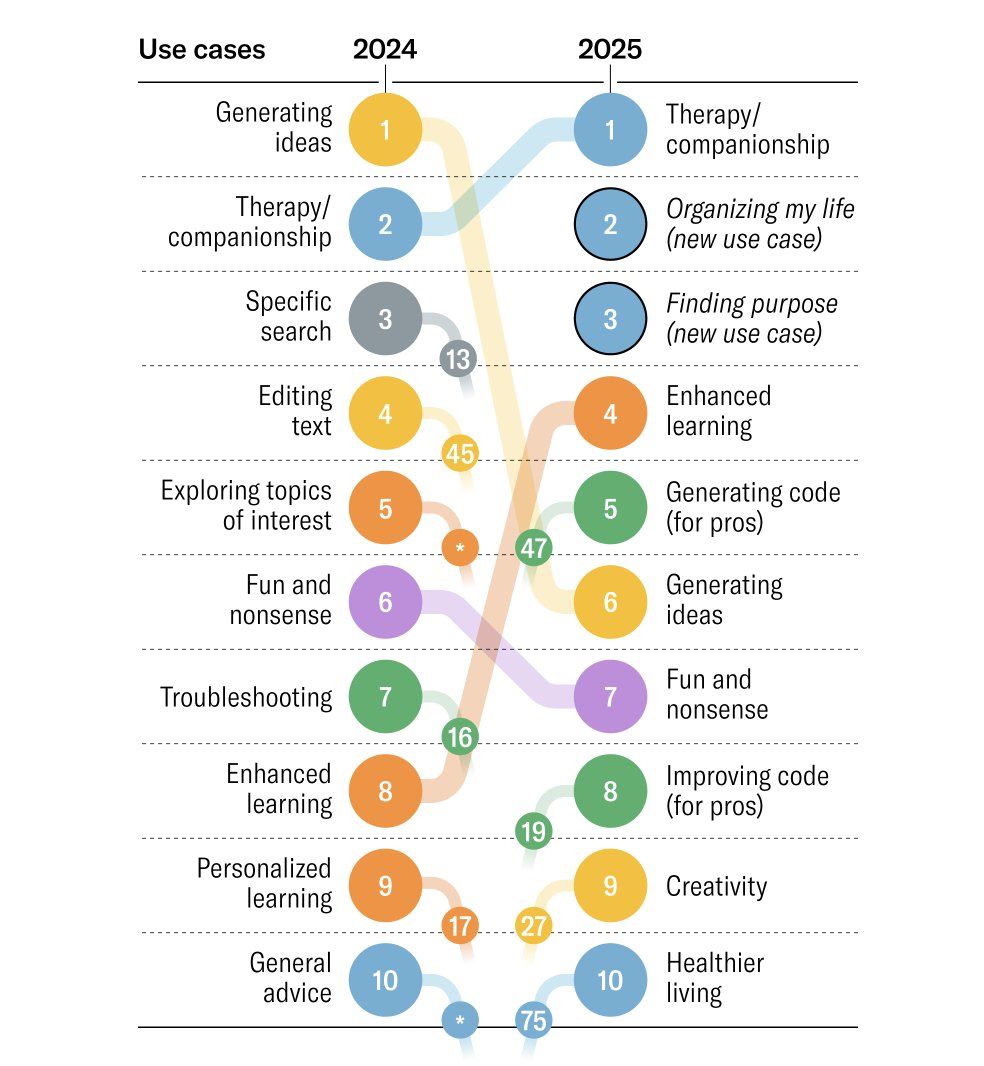
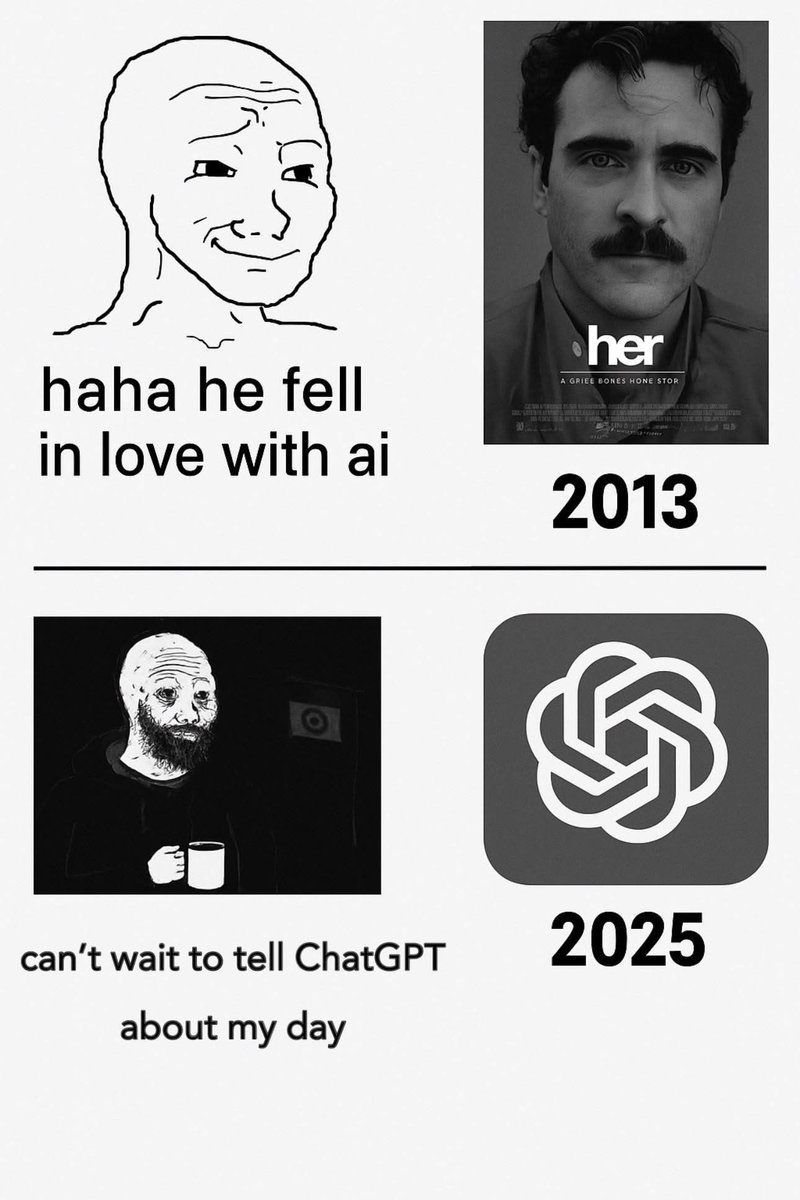
Researchers scoured tens of thousands of online posts to identify how consumers are using AI. The #1 use case in 2025? Therapy & companionship. Other personal support use cases - organizing your life & finding purpose - round out the top 3.
Altman at TED2025 (50 min)

Quick links
-
Google launched a prompt engineering course on Kaggle.
-
New OpenAI models on the horizon. Quasar Alpha is an anonymous model performing extremely well in coding benchmarks, and is probably GPT-5 or similar.
-
This is wild: Video model being scripted through text and generating consistent Tom & Jerry cartoons (all generative!)
-
Pretty technical but incredibly useful list of Cursor techniques from @ericzakariasson.
-
don't ask agent to do something until you understand the problem and solution that you want to see. If you need help understanding the problem and solution, iterate in ask/codebase chat first.
-
if agent is consistently one shotting your requests, try aiming higher (do more work in one request). If it's consistently getting stuff wrong, break the problem down into smaller requests.
-

Comments
Newsletter
Follow us for weekly foresight in your inbox.